Evaluating Font of Hearts for Romantic Design Projects
Selecting the appropriate typeface is a critical decision in graphic design, particularly when the project involves emotional communication. Typography does more than convey text; it sets the tone, establishes context, and influences how a message is received. For designers and individuals creating content centered on affection, romance, or celebration, Font of Hearts frequently appears as a candidate. This typeface is characterized by its integration of heart glyphs directly into the letterforms, offering a distinct visual style. However, like any specialized display font, it requires careful evaluation to determine if it aligns with specific project goals, legibility requirements, and aesthetic standards.
Defining the Typographic Character
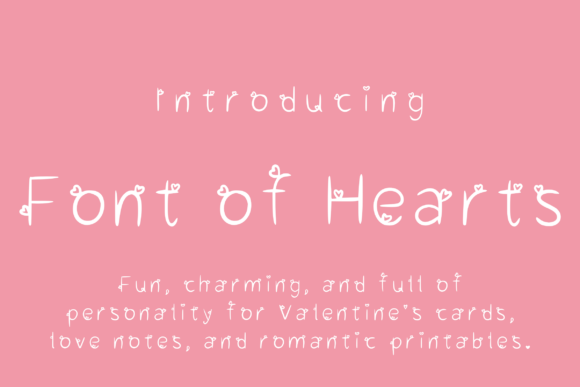
Font of Hearts is classified as a decorative display typeface. Its primary distinguishing feature is the structural incorporation of heart shapes within the standard alphabet. Unlike fonts that simply add hearts as separate ornaments or ligatures, this typeface modifies the anatomy of the letters themselves. In many instances, the heart replaces the tittle (the dot above the 'i' or 'j') or serves as a terminal stroke on curved letters. This creates a custom-drawn appearance that feels organic rather than superimposed.
The design intent is clearly rooted in romantic expression. The letterforms maintain a hand-lettered quality that suggests intimacy and personal effort. Despite the decorative elements, the underlying structure retains enough familiarity to remain recognizable as text. This balance between ornamentation and function is what separates usable display fonts from novelty items that are difficult to read. Understanding this baseline helps set realistic expectations for where the font performs best and where it may fall short.
Primary Use Cases and Strengths
When evaluating Font of Hearts, it is helpful to identify the scenarios where its unique characteristics provide tangible value. The font excels in contexts where the visual medium is as important as the verbal message. Key applications include:
- Valentine’s Day Collateral: The thematic alignment is immediate. For greeting cards, social media graphics, and digital stickers associated with February 14th, the font reduces the need for additional clip art or embellishments.
- Wedding and Engagement Stationery: While traditional weddings often call for formal serifs or scripts, modern and whimsical celebrations benefit from playful typography. Font of Hearts works well for save-the-dates, reception signage, and favor tags where a relaxed, joyful atmosphere is desired.
- Personal Correspondence: For love notes, anniversary letters, or personalized gift tags, the typeface mimics the warmth of handwriting without requiring calligraphy skills.
- Digital Scrapbooking and Journaling: In digital layouts where space is limited, using a font that doubles as decoration allows for cleaner compositions without visual clutter.
In these situations, the font acts as a dual-purpose element, conveying both linguistic meaning and emotional subtext simultaneously. This efficiency can streamline the design process and create a cohesive visual identity for romantic projects.
Legibility and Functional Tradeoffs
While the charm of Font of Hearts is evident, practical evaluation must address readability. Decorative fonts inherently carry higher cognitive load for readers. The modification of letter shapes means that recognition relies more heavily on context than in standard typefaces. Users should consider several tradeoffs before committing to this font for extended use.
Reading Speed: Text set in Font of Hearts will be read slower than text in a sans-serif or serif face. This is acceptable for headlines, short phrases, or captions, but problematic for paragraphs. If the goal is rapid information transfer, this typeface introduces unnecessary friction.
Scaling Issues: The intricate details of the integrated hearts require adequate resolution and size. At very small point sizes, the hearts may blur or fill in, making the letters look malformed. Conversely, at extremely large sizes, the decorative elements may appear disproportionate if not optically adjusted. Testing across intended output sizes is mandatory.
Tone Limitations: The font possesses a singular emotional register: sweet and playful. It lacks the gravity required for solemn occasions or the neutrality needed for informational content. Using it inappropriately can undermine the seriousness of a message or appear unprofessional in mixed-context environments.
Comparing Alternatives and Complementary Pairings
Rarely should Font of Hearts be used in isolation. Effective typography relies on contrast and hierarchy. When considering this font, evaluate how it interacts with other typefaces in your library. It pairs most effectively with clean, simple sans-serifs or neutral serifs that ground the composition. A minimalist body font allows the decorative headers to shine without competing for attention.
If your project requires a romantic feel but demands higher legibility or formality, consider comparing Font of Hearts against these alternatives:
- Traditional Scripts: Calligraphic scripts offer romance through flow and elegance rather than pictorial glyphs. They are often more appropriate for formal wedding invitations where "sweetness" is secondary to "sophistication."
- Serif Display Faces: High-contrast serifs can convey love and warmth through proportion and spacing alone, without relying on literal symbols. These are safer choices for luxury branding or high-end stationery.
- Handwritten Sans-Serifs: For a casual, authentic feel that avoids the overt symbolism of hearts, a quality handwritten sans-serif may provide personality while maintaining better readability at smaller sizes.
The decision ultimately hinges on whether the literal representation of hearts adds value or merely adds noise. If the audience expects subtle elegance, Font of Hearts may be too direct. If the audience seeks overt playfulness, it is likely an optimal choice.
Practical Decision-Making Criteria
To determine if Font of Hearts is the correct selection for a current project, apply the following evaluation checklist:
- Word Count Threshold: Is the text fewer than ten words? If yes, proceed. If no, reconsider or limit usage to a single keyword or phrase.
- Audience Expectation: Does the target demographic associate heart imagery with positivity and appropriateness in this context? Cultural and generational factors influence how decorative typography is perceived.
- Output Medium: Will the final product be viewed at a size where the internal details remain crisp? Digital screens and print have different rendering constraints that affect decorative fonts.
- Brand Consistency: If designing for an established brand, does this level of whimsy align with existing visual guidelines? Introducing a highly stylized font can disrupt brand coherence if not managed carefully.
Font of Hearts serves a specific niche within the typographic landscape. It is a tool designed for emotional amplification in short-form visual communication. By understanding its structural qualities, recognizing its functional limitations, and pairing it thoughtfully with supporting typefaces, designers can leverage its charm effectively. The font succeeds not because it is versatile, but because it executes a specific aesthetic function with clarity and intention. Evaluate it based on that specific function, and it will prove to be a valuable asset for projects requiring a genuine touch of affection.