Evaluating Celestial Pair for Cosmic and Fantasy Design Projects
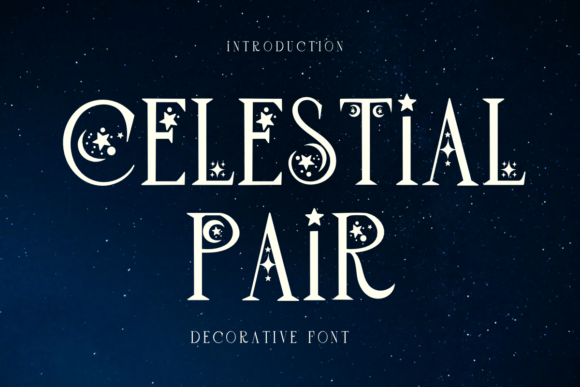
Selecting the right typeface for thematic projects often requires balancing aesthetic appeal with functional legibility. For designers working within fantasy, astrology, or whimsical children’s media, standard serif fonts can sometimes feel too corporate, while novelty display fonts often sacrifice readability for ornamentation. Celestial Pair occupies a specific niche in this spectrum as a magical decorative font inspired by the night sky. It integrates star, moon, and swirl details directly into elegant serif characters, offering a middle ground between structured typography and illustrative art.
Understanding where Celestial Pair fits within the broader landscape of decorative typography is essential for making an informed selection. This evaluation explores its distinct characteristics, compares it to alternative stylistic approaches, and outlines practical considerations for integration into professional and personal design workflows.
Defining the Aesthetic: Ornamentation vs. Structure
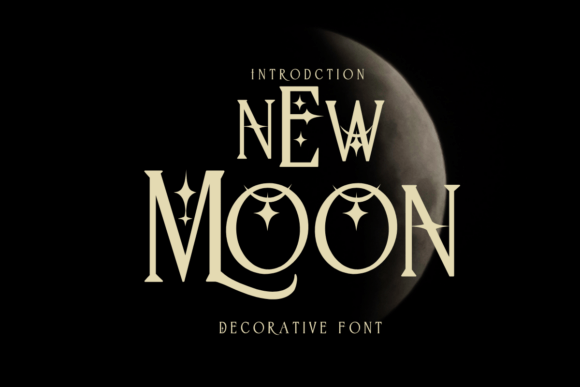
Celestial Pair is best categorized as an ornamental serif. Unlike pure script fonts that mimic handwriting or rigid geometric sans-serifs, this typeface retains the vertical stress and stroke contrast typical of traditional serifs. The distinction lies in the integration of thematic elements. Rather than treating stars and moons as separate clip-art assets placed around text, these motifs are embedded into the letterforms themselves. Swirls may extend from terminals, and celestial bodies might replace tittles or serve as ligatures.
This structural approach offers specific advantages over other cosmic-themed options:
- Typographic Cohesion: Because the decorations are part of the glyph design, spacing and rhythm remain consistent. Designers avoid the visual disjointedness that occurs when manually placing iconography next to standard text.
- Serif Foundation: The underlying serif structure provides a familiar reading cadence. Even with heavy decoration, the eye recognizes letter shapes more quickly than it would with abstract or purely illustrative alphabets.
- Thematic Specificity: While many "fantasy" fonts lean toward medieval or gothic aesthetics, Celestial Pair specifically targets nocturnal and ethereal themes. This makes it distinct from general-purpose fairy tale fonts that might rely on rough textures or archaic letterforms.
Comparing Celestial Pair to Alternative Stylistic Categories
When researching typography for dreamy invitations or astrology branding, several categories compete for attention. Evaluating Celestial Pair against these alternatives helps clarify its best-fit scenarios.
Ornamental Serifs vs. Hand-Lettered Scripts
Hand-lettered scripts are frequently chosen for wedding stationery and fantasy book covers due to their organic flow. However, scripts can present significant legibility challenges at smaller sizes or in digital environments. Celestial Pair offers a more upright, structured alternative. If the project involves body copy alongside headers, or if the audience includes younger readers (as in children’s books), the serif foundation of Celestial Pair generally outperforms complex scripts in accessibility. Scripts excel at conveying personal intimacy; Celestial Pair excels at conveying atmospheric elegance without sacrificing clarity.
Integrated Motifs vs. Modular Icon Sets
A common alternative approach is pairing a clean, minimalist font with a separate set of vector celestial icons. This modular method offers maximum flexibility, allowing designers to position stars and moons independently of the text. However, it requires manual composition and careful alignment to prevent the design from looking cluttered. Celestial Pair streamlines this process by unifying text and image. The tradeoff is reduced layout flexibility; you cannot move a star without moving the letter. For projects requiring rapid iteration or consistent branding across multiple touchpoints, the integrated nature of Celestial Pair reduces production time compared to custom compositing.
Ethereal Serifs vs. Gothic/Medieval Display Fonts
The fantasy genre encompasses diverse sub-aesthetics. Gothic and blackletter fonts dominate high-fantasy and dark academia niches but can feel aggressive or historically weighted. Celestial Pair represents a softer, more contemporary interpretation of magic. It aligns better with modern witchcraft branding, tarot deck design, and gentle storytelling than heavier historical revivals. When comparing options, consider whether the project demands historical gravitas or ethereal wonder. Celestial Pair serves the latter; blackletter serves the former.
Practical Strengths and Functional Tradeoffs
No decorative font is universally applicable. A realistic assessment of Celestial Pair must acknowledge both its capabilities and its limitations within professional workflows.
Strengths in Contextual Application
The primary strength of Celestial Pair is its ability to establish immediate thematic context without additional illustration. In astrology branding, for example, the font itself communicates the subject matter, reducing the need for redundant zodiac symbols. For children’s books, the playful yet readable letterforms support literacy development while maintaining engagement. The serif base ensures that even early readers can decode words, while the celestial details reward closer inspection.
In invitation design, the font bridges formality and whimsy. Traditional serifs can feel stiff for casual celebrations, while cartoons can undermine the significance of the event. Celestial Pair maintains typographic dignity through its serif proportions while softening the tone through organic detailing. This balance makes it particularly suitable for baby showers, milestone birthdays, and evening weddings.
Limitations and Decision Factors
Despite its versatility, Celestial Pair has inherent constraints that may necessitate alternative choices:
- Size Sensitivity: Intricate details like small stars and fine swirls degrade at low resolutions or small point sizes. Below 18–24 points in print or equivalent pixel dimensions on screen, the ornamentation may become visual noise. Projects requiring extensive small text should pair Celestial Pair with a complementary clean serif rather than using it throughout.
- Tonal Boundaries: The font’s inherent sweetness and ethereal quality make it unsuitable for horror, sci-fi, or corporate contexts. Even within fantasy, it may clash with gritty or realistic narratives. Evaluators should test the font against actual project imagery before committing.
- Licensing Considerations: Decorative fonts often have complex licensing tiers distinguishing personal use, commercial print, and web embedding. Users must verify that their intended application falls within purchased rights. Some celestial-themed alternatives offer open-source licensing, which may be preferable for budget-constrained or open-access projects.
- Language Support: Thematic display fonts sometimes have limited character sets. If the project requires extended Latin characters, diacritics, or non-Latin scripts, Celestial Pair may not provide adequate coverage. Always audit the glyph map against content requirements before selection.
Integration Strategies and Pairing Recommendations
Celestial Pair functions most effectively as a headline or accent typeface rather than a workhorse body font. Successful implementation typically involves strategic pairing.
For editorial layouts and children’s books, combine Celestial Pair with a neutral humanist sans-serif or a simple transitional serif. The contrast allows the decorative font to shine in chapter titles and drop caps while ensuring comfortable reading for extended passages. The key is selecting a companion font with similar x-height proportions to maintain visual harmony across hierarchy levels.
In branding applications, consider using Celestial Pair exclusively for logotypes and primary headings, with secondary information set in a matching weight of a versatile grotesque or geometric sans. This creates clear information architecture: the decorative font signals brand identity, while the neutral font delivers functional content. Avoid pairing Celestial Pair with other highly decorative typefaces, as competing ornamentation creates visual chaos and undermines the font’s distinctive qualities.
Making the Final Selection Decision
Choosing Celestial Pair ultimately depends on three factors: thematic alignment, technical requirements, and audience expectations. If the project demands nocturnal magic, maintains adequate display sizes, and targets audiences who appreciate refined whimsy over historical accuracy, Celestial Pair represents a strong candidate. Its integrated approach to celestial ornamentation solves common composition challenges while maintaining typographic integrity.
However, if the project requires extensive body text, operates at small scales, demands multilingual support, or targets audiences expecting different genre conventions, alternative solutions may prove more effective. Modular icon systems, cleaner serifs, or different stylistic categories might better serve those specific needs.
Professional evaluation should always include testing with actual project content. Mock up headlines, sample paragraphs, and critical UI elements before finalizing any typeface decision. Celestial Pair offers distinctive value within its niche, but like all specialized tools, its effectiveness depends entirely on appropriate application. By understanding both its stellar qualities and its practical boundaries, designers can confidently determine whether this cosmic typeface deserves a place in their current project or resource library.