Elevating Visual Communication: The Strategic Role of New Moon in Modern Design
In the rapidly evolving landscape of digital and print design, typography has transcended its traditional role as a mere vehicle for text. It has become a primary interface for emotional connection, brand identity, and user experience. For professionals, creators, and entrepreneurs navigating this saturated market, the selection of a typeface is no longer just an aesthetic choice; it is a strategic business decision. Among the myriad of options available today, New Moon has emerged as a significant decorative font that bridges the gap between personal expression and commercial viability. Understanding why this specific typeface resonates with contemporary audiences requires looking beyond its curves and ligatures to examine the broader shifts in consumer psychology, digital workflows, and the demand for authentic visual storytelling.
Redefining Decorative Typography in the Digital Age
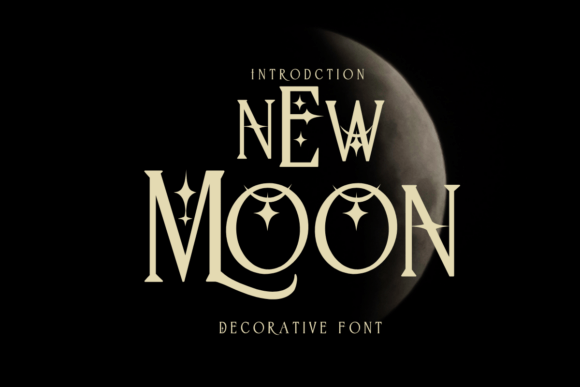
Historically, decorative fonts were often relegated to the periphery of professional design, reserved sparingly for headlines or novelty items. They were frequently viewed as impractical or too informal for serious business applications. However, the current design zeitgeist has shifted dramatically. We are witnessing a move away from the sterile minimalism that dominated the early 2010s toward a warmer, more human-centric aesthetic. This is where New Moon finds its relevance. As a decorative font, it possesses the unique ability to inject personality into digital spaces without sacrificing legibility or professionalism.
The industry is currently responding to "digital fatigue." Consumers and clients alike are seeking interfaces and materials that feel handcrafted and intentional rather than algorithmically generated. New Moon serves as a tactile counterpoint to the flatness of standard sans-serif system fonts. By incorporating organic shapes and fluid lines, it mimics the imperfections of hand-lettering, satisfying a growing market preference for authenticity. For marketers and freelancers, utilizing this typeface signals an understanding of current emotional design trends, positioning brands as approachable and relatable in an increasingly automated world.
Versatility Across Personal and Commercial Workflows
One of the defining characteristics of successful modern assets is adaptability. Professionals cannot afford to maintain separate toolkits for personal projects and client work; efficiency demands resources that traverse both domains seamlessly. New Moon exemplifies this cross-functional utility. While it is exceptionally well-suited for intimate applications such as taking notes, writing a diary, or crafting personalized greeting cards, its structural integrity allows it to scale effectively into commercial territories.
This duality addresses a changing need in the creative workflow. Freelancers and solopreneurs often manage their own branding alongside client deliverables. A font that feels appropriate for a personal journal yet robust enough for a product launch streamlines the asset management process. It eliminates the cognitive load of switching between disparate visual languages, allowing for a cohesive creative output that maintains a consistent thread of warmth and sophistication across all touchpoints.
Strategic Applications in Branding and Merchandise
For entrepreneurs and small business owners, the distinction between content and commerce is blurring. Social media posts are not just engagement tools; they are direct sales channels. Stationery is not just office supply; it is brand collateral. New Moon’s design architecture supports this integrated approach to business communication. Its versatility extends far beyond digital screens, making it a valuable asset for physical product development and omnichannel marketing strategies.
- Social Media and Content Creation: In the attention economy, scroll-stopping visuals are paramount. New Moon provides the necessary contrast against standard feed aesthetics, making quotes, announcements, and captions stand out while maintaining brand consistency.
- Merchandise and Apparel: From mugs to shirts, the font’s decorative nature translates beautifully to merchandise. It evokes a boutique, artisanal quality that justifies premium pricing and fosters customer loyalty through perceived value.
- Print Collateral and Packaging: Whether used on banners, cards, or product packaging, the typeface adds a layer of texture that digital-only brands often lack, grounding the brand in physical reality.
- Stationery and Corporate Gifting: Elevating standard business correspondence with a distinctive typeface can transform routine communication into a memorable brand experience.
These applications demonstrate that New Moon is not merely a stylistic overlay but a functional component of a broader business strategy. It enables brands to maintain a unified voice whether they are posting on Instagram or printing a limited-edition run of tote bags.
Meeting the Demand for Accessible Creativity
The democratization of design tools has empowered non-designers to take ownership of their visual identity. However, this accessibility brings a challenge: avoiding the generic look of template-based design. Professionals and enthusiasts alike are seeking assets that offer a "custom" feel without the prohibitive cost of bespoke lettering. New Moon occupies this crucial middle ground. It offers the distinctiveness of custom calligraphy with the scalability and ease of use of a digital font file.
This aligns with broader technological trends in creative software. As platforms like Canva, Procreate, and Adobe Express become staples in entrepreneurial workflows, the demand for high-quality, versatile add-ons has surged. Users expect fonts that perform reliably across different rendering engines and background colors. The practical observation here is that New Moon’s popularity is partly driven by its compatibility with modern, agile creation methods. It empowers users to produce agency-level aesthetics within compressed timelines, addressing the speed-to-market pressures faced by today’s content creators.
The Psychology of Softness in Professional Communication
Why are people paying attention to this specific style of decorative typography now? The answer lies in the psychological response to visual stimuli. In a post-pandemic business environment, there is a heightened sensitivity to tone. Aggressive, bold, and overly corporate typography can sometimes be perceived as cold or out of touch. Conversely, the soft, flowing characteristics of New Moon communicate empathy, care, and mindfulness.
For sectors such as wellness, education, coaching, and lifestyle e-commerce, this typographic choice is a direct extension of brand values. Even in more traditional industries, integrating a decorative element like New Moon for accent text or headers can soften the corporate edge, making complex or dry information feel more digestible and human. This is not about abandoning professionalism; it is about evolving the definition of professional communication to include emotional intelligence. The font acts as a visual cue that tells the audience, "There is a person behind this message."
Future-Proofing Visual Identity Through Timelessness
Trends in design are cyclical, but the best assets possess a timeless quality that insulates them from rapid obsolescence. While New Moon taps into current preferences for organic and handwritten styles, its balanced proportions prevent it from feeling like a fleeting fad. For businesses investing in long-term brand building, this stability is essential. Rebranding is expensive and disruptive; selecting a typeface that balances trend-awareness with classic decorative principles protects that investment.
Furthermore, as we look toward future developments in augmented reality (AR) and spatial computing, typography will need to exist in three-dimensional space. Decorative fonts with strong silhouettes and clear forms, like New Moon, are better positioned to translate into these emerging mediums than overly intricate or distressed scripts. Forward-thinking designers are already considering how 2D assets will function in immersive environments, and choosing versatile, structurally sound decorative fonts is a proactive step in that direction.
Integrating New Moon into a Cohesive Design System
To maximize the ROI of any typographic asset, it must be integrated thoughtfully into a larger design system. Using New Moon effectively requires understanding hierarchy and pairing. It shines brightest when contrasted with clean, neutral sans-serifs or structured serifs. This juxtaposition creates visual tension that guides the viewer’s eye and emphasizes key messages.
- Establish Hierarchy: Reserve New Moon for high-impact elements such as headlines, pull quotes, or logos. Avoid using it for body copy to maintain readability and preserve its specialness.
- Contextual Pairing: Test pairings with your primary brand fonts. Ensure that the x-heights and weights complement rather than clash with your existing toolkit.
- Color and Texture: Leverage the font’s decorative nature by experimenting with color gradients or textures that enhance its organic feel, particularly in digital formats.
- Cross-Platform Testing: Verify legibility across devices and print proofs. What looks elegant on a desktop monitor must remain clear on a mobile screen or embroidered fabric.
By treating New Moon as a strategic element of a comprehensive visual language, professionals can unlock its full potential. It becomes more than just a pretty face; it becomes a tool for differentiation, connection, and effective communication.
Conclusion: The Intersection of Art and Utility
The rise of New Moon in professional and creative circles is indicative of a larger maturation in the design industry. We have moved past the era where decoration was seen as superfluous. Today, aesthetics are recognized as a critical component of functionality and user experience. Whether you are a marketer looking to humanize your brand, a freelancer streamlining your asset library, or an entrepreneur launching a new product line, this decorative font offers a unique blend of artistic charm and practical application.
Ultimately, the value of New Moon lies in its ability to adapt to the user's intent. It respects the intimacy of a diary entry while commanding the attention required for a billboard. In a marketplace defined by noise, it offers a voice that is distinct, warm, and unmistakably human. As design continues to evolve at the intersection of technology and emotion, assets that facilitate genuine connection will remain indispensable. Embracing such tools is not just a stylistic preference; it is a recognition of the changing expectations of a modern audience that demands both beauty and substance in every interaction.