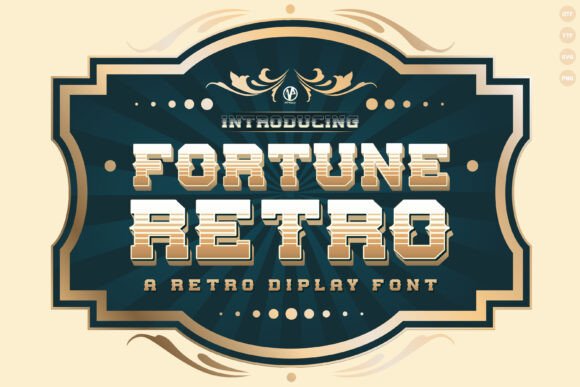
Fortune Retro: Elevating Vintage Design Without the Common Pitfalls
There is a distinct charm in typography that feels lived-in, and Fortune Retro captures this aesthetic with remarkable precision. As a vintage and grunge-distressed display font, it offers an immediate sense of nostalgia and authenticity that clean, modern sans-serifs simply cannot replicate. When you add it confidently to your projects, the results can be transformative, turning a flat digital canvas into something that feels tactile and historical. However, the very characteristics that make this typeface so appealing are also what make it challenging to use correctly. Many designers and business owners fall into traps when working with distressed fonts, leading to illegible logos or cluttered marketing materials. Understanding how to leverage Fortune Retro effectively requires moving beyond simple installation and considering the practical realities of texture, hierarchy, and application.
The Misconception of Distressed Legibility
The most frequent error encountered when using Fortune Retro is treating it as a universal solution for all text elements. Because the font carries so much visual weight and character, there is a temptation to use it for headlines, subheads, and even body copy to maintain a consistent "vibe." This approach almost always backfires. The grunge texture that looks stunning at 72pt becomes visual noise at 18pt. At smaller sizes, the distressed edges bleed together, reducing contrast and making the text difficult to read, particularly on screens or low-resolution prints.
To avoid this, reserve Fortune Retro strictly for display purposes. It is designed to be large, bold, and brief. Think of it as the focal point of your composition rather than the foundation. Pair it with a clean, high-legibility serif or sans-serif typeface for supporting information. This contrast does not dilute the vintage aesthetic; rather, it amplifies it by giving the eye a place to rest. A common correction for beginners is to increase the size of Fortune Retro significantly more than they initially feel comfortable with. If you think it is too big, it is probably just right. The texture needs physical space to breathe and be appreciated.
Navigating Color and Background Contrast
Another overlooked detail involves how grunge textures interact with color and background values. Fortune Retro relies on transparency and erosion to create its effect. If you place this font over a busy photograph or a textured paper background without proper masking or contrast adjustment, the letters will disappear into the chaos. Similarly, using low-contrast color combinations, such as dark grey on black or pastel yellow on white, exacerbates readability issues because the distressed edges lack definition.
Practical advice here is to test your color choices rigorously before finalizing a design. Use solid, muted backgrounds that complement the era Fortune Retro evokes without competing with it. Creams, deep navies, forest greens, and burnt oranges often work better than stark whites or neon brights, which can make the distressing look like digital artifacts rather than intentional wear. Always check your design in grayscale to ensure the value contrast holds up regardless of hue. If the text vanishes in black and white, the color version will fail in real-world viewing conditions where lighting varies.
Technical Considerations for Print and Digital
A significant misunderstanding arises regarding file formats and rendering. Not all versions of distressed fonts are created equal, and assuming that a screen preview accurately represents the final output is a costly mistake. In digital environments, browsers may render the rough edges of Fortune Retro differently depending on anti-aliasing settings. What looks like artistic grit on your design monitor might appear as pixelated jaggedness on a mobile device. Conversely, in print, the fine details of the grunge texture can fill in with ink if the point size is too small or the paper stock is too absorbent.
- For Digital Projects: Export headers as SVGs or high-resolution PNGs rather than relying solely on web fonts if the texture is critical to the brand identity. Test across multiple browsers and devices to ensure the distressing renders smoothly.
- For Print Materials: Request a physical proof before running a full batch. Uncoated papers tend to spread ink, which can soften the distressed effect pleasantly or ruin it entirely depending on the desired outcome. Coated stocks preserve sharpness but can sometimes make the grunge look artificial.
- File Integrity: Ensure you have licensed the correct file format (OTF/TTF/WOFF2) for your specific medium. Using a desktop license for a website embed, or vice versa, creates both legal and technical headaches.
Avoiding the "Costume" Effect in Branding
While Fortune Retro is undeniably stylish, using it without contextual awareness can make a brand look like a caricature of the past rather than a thoughtful homage. This happens when the font is applied indiscriminately to businesses or messages that do not align with its inherent tone. A tech startup focusing on futuristic AI solutions, for example, would likely create cognitive dissonance by using a heavy grunge display font. The mismatch confuses the audience and undermines trust.
Before committing to Fortune Retro, evaluate whether the vintage aesthetic serves your communication goal or merely decorates it. The font works exceptionally well for artisanal products, heritage brands, music festivals, craft breweries, and editorial layouts focused on history or culture. It signals craftsmanship, longevity, and warmth. If your project aims to convey speed, clinical precision, or cutting-edge innovation, this typeface may actively work against your message. Authenticity in design comes from alignment between form and function, not just visual appeal.
Licensing and Ethical Usage Checks
Finally, a practical but often neglected step is verifying licensing terms before purchase or download. Free font sites frequently host unauthorized or modified versions of premium typefaces like Fortune Retro. These files may lack essential glyphs, kerning pairs, or alternate characters, leading to frustrating gaps in your layout. More importantly, using an unlicensed font in a commercial project exposes you to legal risk. Even if you are a hobbyist now, a project could evolve into a commercial venture later, creating retroactive liability.
Always acquire Fortune Retro from reputable foundries or authorized marketplaces. Check the specific license tier you need. Desktop licenses typically cover static images and print, while webfont licenses are required for CSS embedding. App and e-pub licenses are separate categories entirely. Investing in the correct license upfront is far less expensive than redesigning a brand identity due to compliance issues later. Furthermore, legitimate purchases support the type designer, ensuring they can continue creating high-quality tools that brighten up our creative landscape.
When used with intention and technical awareness, Fortune Retro is more than just a decorative element; it is a powerful storytelling tool. By avoiding common pitfalls regarding scale, contrast, context, and licensing, you ensure that the vintage charm enhances your work rather than detracting from it. Take the time to test, pair thoughtfully, and respect the medium, and this typeface will deliver the confident, polished results your projects deserve.