Sangua Font: Bold 70s Retro Style for Modern Design
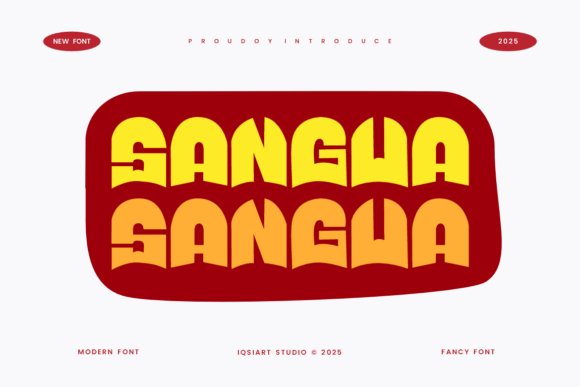
In the current landscape of graphic design, nostalgia is more than a fleeting trend; it is a strategic tool for communication. Sangua emerges as a significant typographic asset in this space, offering a bold and funky retro aesthetic that immediately signals a specific era and mood. This typeface is not merely a reproduction of 1970s lettering but a refined interpretation that balances vintage charm with contemporary geometric precision. For designers, marketers, and business owners, understanding the functional application of Sangua goes beyond appreciating its chunky letterforms. It involves recognizing how its distinctive character can solve specific visual problems, from establishing brand personality to improving information hierarchy in crowded media environments.
Leveraging Geometric Nostalgia for Brand Identity
The primary value of Sangua lies in its ability to convey warmth and approachability through strong geometric shapes. Unlike the sterile minimalism that dominated corporate design in the early 2000s, Sangua’s playful curves introduce a human element to branding. This is particularly beneficial for businesses seeking to differentiate themselves in saturated markets. A coffee roaster, a vinyl record shop, or a boutique marketing agency can utilize this font to instantly communicate a sense of heritage and authenticity without appearing outdated. The typeface acts as a visual shorthand, telling consumers that the brand values creativity, history, and a relaxed atmosphere.
When integrating Sangua into a brand identity system, consistency is key to maintaining professionalism. Because the font carries such a heavy stylistic weight, it functions best as a primary display face rather than a utility text. Using it for logotypes, headlines, and signature packaging elements creates a cohesive visual anchor. However, pairing it requires intentionality. To prevent the design from feeling like a costume party, combine Sangua with clean, neutral sans-serif typefaces for body copy. This contrast ensures that the retro vibe remains a deliberate accent rather than an overwhelming theme, allowing the brand to feel both nostalgic and operationally modern.
Enhancing Visual Hierarchy in Event Marketing
Event promotion demands immediate attention, and Sangua’s bold structure excels in this high-stakes environment. Whether designing flyers for music festivals, workshop announcements, or seasonal sales, the font’s thick strokes and lively attitude command visibility even at smaller sizes or from a distance. The chunky nature of the letterforms provides excellent negative space opportunities, allowing designers to weave imagery or texture directly into the typography. This integration can significantly reduce clutter on promotional materials, making the essential details—dates, locations, and calls to action—stand out more effectively against busy backgrounds.
For digital marketers, Sangua offers distinct advantages in social media graphics where scroll-stopping power is essential. The font’s unique silhouette breaks the monotony of standard web-safe fonts often seen in feeds. When used in Instagram stories or Facebook event headers, Sangua creates a tactile quality that mimics physical print, bridging the gap between digital and analog experiences. This tactile association can increase engagement rates by evoking positive emotional responses linked to vintage aesthetics. However, users must be mindful of legibility on mobile screens. Testing various weights and spacing is necessary to ensure the funky curves do not merge into indistinct blobs when scaled down for smartphone displays.
Practical Pairing Strategies for Readability
While Sangua is undeniably expressive, its success depends heavily on what surrounds it. The font solves the problem of "boring" headlines but introduces the challenge of balance. Professionals should view Sangua as the lead vocalist in a band; it needs a rhythm section to function correctly. Here are practical approaches to pairing this typeface effectively:
- Contrast with Grotesques: Pair Sangua with neo-grotesque sans-serifs like Helvetica Now or Inter. The mathematical neutrality of these fonts grounds the exuberance of Sangua, creating a sophisticated tension that feels editorial and polished.
- Mono-Spaced Support: For a more technical or zine-inspired look, use monospaced fonts for captions and metadata. This combination leans into the DIY ethos of the 70s while maintaining crisp readability for logistical information.
- Avoid Competing Displays: Never pair Sangua with other decorative or script fonts. The visual noise created by two strong personalities will confuse the viewer and dilute the message. Let Sangua own the decorative space entirely.
- Color Considerations: Sangua’s volume absorbs color differently than thin fonts. Muted earth tones, warm creams, and burnt oranges enhance its retro roots, while high-contrast neon palettes push it toward a modern reinterpretation. Choose colors based on whether the goal is historical accuracy or contemporary fusion.
Navigating Limitations and Contextual Fit
Despite its versatility, Sangua is not a universal solution. Recognizing when not to use this typeface is just as important as knowing when to deploy it. Its inherent playfulness and historical baggage make it unsuitable for industries requiring strict authority, sterility, or futurism. Legal firms, medical institutions, and high-tech cybersecurity companies would likely find that Sangua undermines their core messaging of precision and seriousness. In these contexts, the font’s "lively attitude" could be misread as unprofessional or frivolous. Designers must always audit the brand’s core values against the font’s connotations before committing to it.
Additionally, accessibility must remain a priority when working with such stylized letterforms. While Sangua is generally legible due to its geometric foundation, the decorative curves can pose challenges for readers with dyslexia or visual impairments if not handled carefully. Avoid using Sangua for long-form paragraphs, navigation menus, or critical safety information. Reserve it for large-format display purposes where the individual character shapes are distinct and easily recognizable. Always test color contrast ratios, as the bold weight can sometimes create optical illusions that reduce perceived contrast against certain background colors. By treating Sangua as a specialized tool rather than a default setting, creatives can harness its power responsibly and effectively.
Maximizing Efficiency in Creative Workflows
Beyond aesthetics, choosing a font like Sangua can streamline the decision-making process in creative projects. When a project brief calls for "vintage," "retro," or "groovy," designers often waste hours sifting through hundreds of mediocre revivals that feel either too kitschy or too derivative. Sangua serves as a reliable benchmark for quality in this niche. Its balanced construction means less time spent manually adjusting kerning or correcting awkward ligatures, which is common with lower-quality retro fonts. This efficiency allows freelancers and agencies to deliver higher-quality work within tighter deadlines.
Furthermore, Sangua supports cross-media consistency. A small business owner creating assets for both print packaging and web banners needs a typeface that scales without losing integrity. Sangua’s vector-ready geometry ensures that the curves remain smooth whether printed on a business card or displayed on a billboard. This scalability reduces the need for multiple font variations or custom redraws, simplifying asset management. For educators and content creators producing video thumbnails or course materials, the font’s bold presence ensures text remains readable even when compressed by platform algorithms. Ultimately, Sangua is more than a stylistic choice; it is a pragmatic resource for achieving specific communicative goals with confidence and clarity.