Happy Alphabet: Integrating Playful Typography into Professional Workflows
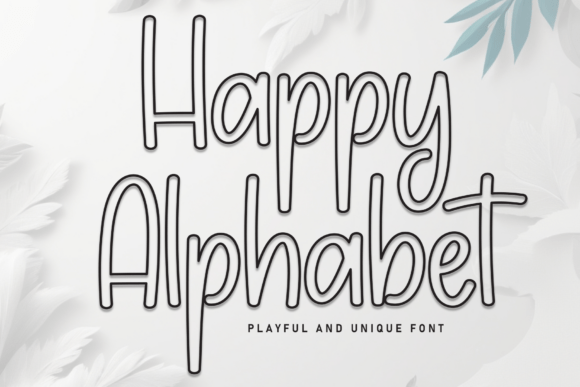
Selecting the right typeface is rarely just an aesthetic decision; it is a strategic component of visual communication that dictates tone, readability, and audience engagement. For professionals working in education, children’s branding, or creative marketing, finding a font that balances whimsy with functional clarity can be a significant bottleneck. Happy Alphabet addresses this specific niche as a playful and unique handwritten font that bursts with positivity. Its design features tall, cheerful characters and smooth outlines, making it distinct from standard script fonts that often sacrifice legibility for style. Understanding how to integrate this asset effectively requires looking beyond its visual appeal and examining where it fits within broader design, educational, and branding workflows.
Defining the Role of Happy Alphabet in Visual Hierarchy
Before opening design software or drafting a lesson plan, it is necessary to establish where a display font like Happy Alphabet functions best within a project's architecture. This typeface is not designed for body copy or dense informational text. Instead, it serves as a high-impact anchor point. In professional workflows, it operates most effectively during the conceptualization phase when establishing the emotional baseline of a project.
When planning a layout, treat Happy Alphabet as a primary visual element rather than mere text. Its tall aspect ratio means it occupies significant vertical space, which influences grid planning and whitespace distribution. Designers should allocate specific zones for this typography early in the wireframing stage. If added as an afterthought, the font’s unique proportions can disrupt established layouts. By defining its role upfront—whether as a headline, a logo lockup, or an interactive learning cue—you ensure the surrounding elements support rather than compete with its distinctive character.
Applications in Educational Material Development
For educators and curriculum designers, typography is a pedagogical tool. The smooth outlines and clear letterforms of Happy Alphabet make it particularly valuable for early childhood education resources. Unlike distressed or overly stylized handwritten fonts, this typeface maintains consistent stroke widths and recognizable character shapes, which supports letter recognition and reading fluency in young learners.
Integrating this font into educational workflows involves specific technical considerations:
- Worksheet Creation: Use Happy Alphabet for headers, instructions, and positive reinforcement stickers. Pair it with a highly legible sans-serif like Arial or Verdana for the actual exercises to maintain cognitive ease.
- Digital Learning Assets: When creating slides or interactive PDFs, test the font at various screen sizes. The tall nature of the characters ensures they remain visible on tablets and smartboards without requiring excessive scaling.
- Print Production: Verify ink spread on uncoated paper stocks common in classroom printing. Smooth outlines generally reproduce well, but always run a test print to ensure fine details do not fill in during high-volume copying.
The goal in this context is to leverage the font’s positivity to create an inviting learning environment while strictly adhering to accessibility standards for emerging readers.
Strategic Branding and Marketing Implementation
In commercial contexts, Happy Alphabet serves as a tonal differentiator. Brands targeting families, children, or lifestyle niches often struggle to appear approachable without looking amateurish. This font bridges that gap by offering handcrafted warmth with professional vector precision. However, successful implementation requires strict brand governance.
During the brand identity development process, establish clear usage guidelines before rolling out campaigns. Define exactly when and where this font is appropriate. For example, a children’s clothing boutique might use Happy Alphabet for seasonal sale announcements and packaging tags but reserve a clean serif for return policies and care instructions. This contrast amplifies the playfulness of the display font while maintaining trust in transactional communications.
Marketing teams should also consider cross-platform consistency. A font that looks charming on a desktop mockup may lose impact in a mobile social media thumbnail. Create a library of pre-approved templates featuring Happy Alphabet at optimized sizes for Instagram stories, email headers, and web banners. This preparation streamlines the content creation workflow, ensuring that every team member uses the asset correctly without needing constant art direction oversight.
Technical Integration and Workflow Compatibility
Efficiency in creative work depends heavily on how well assets integrate with existing tools. Happy Alphabet is typically available in standard formats (OTF/TTF), ensuring compatibility across Adobe Creative Cloud, Canva, Affinity, and Microsoft Office suites. However, file management is often overlooked until a project deadline looms.
Organize your font library systematically. Rather than letting Happy Alphabet sit loosely in a system folder, include it in project-specific asset kits or cloud-based brand folders. This ensures that freelancers, contractors, or remote team members have immediate access to the correct version, preventing substitution errors that can derail brand consistency.
When working in collaborative environments like Figma or web development platforms, verify licensing and rendering behavior. Web fonts require proper CSS implementation to prevent layout shifts due to the font’s tall metrics. Using font-display: swap; in your stylesheet prevents invisible text during loading, while setting explicit line-height values avoids overlapping lines in responsive containers. Addressing these technical details during the setup phase prevents costly revisions later in the production cycle.
Pairing Strategies for Balanced Composition
No font exists in isolation. The success of Happy Alphabet depends largely on what surrounds it. Because the font carries significant personality and visual weight, pairing it with another decorative typeface usually results in visual noise. Effective pairing follows a principle of contrast and support.
- Geometric Sans-Serifs: Fonts like Montserrat or Futura provide a stable, neutral foundation that allows Happy Alphabet to shine without competition. The geometric precision contrasts beautifully with organic hand-drawn curves.
- Humanist Serifs: For a softer, more traditional feel, pair with typefaces like Merriweather or Lora. This combination works exceptionally well in storytelling contexts, such as children’s book covers or narrative-driven blog posts.
- Monospaced Typefaces: In modern, edgy designs aimed at younger parents or Gen Z audiences, pairing with a monospace font creates an interesting tension between digital utility and analog warmth.
Always test pairings in context. What works on a mood board may fail in execution. Create style tiles that show Happy Alphabet alongside potential partners at actual intended sizes. Evaluate kerning, leading, and color interactions to ensure the combination enhances readability rather than hindering it.
Quality Control and Long-Term Asset Management
Maintaining quality over time requires proactive management. Handwritten fonts can sometimes suffer from inconsistent spacing or missing glyphs depending on the foundry. Upon acquiring Happy Alphabet, conduct a thorough audit. Check for complete character sets, including punctuation, numbers, and special symbols needed for your specific language or region. Identify any kerning pairs that may need manual adjustment in headlines.
Document these observations in your internal design system or brand guidelines. If you discover that the exclamation point sits too low or that certain letter combinations require tracking adjustments, note this explicitly. This institutional knowledge saves hours of troubleshooting for future designers and ensures consistent output regardless of who executes the work.
Additionally, monitor performance metrics if using the font in digital products. Track engagement rates on materials featuring Happy Alphabet versus control designs. Does the playful typography actually increase click-through rates on educational newsletters? Do students respond better to worksheets with cheerful headers? Data-driven validation transforms subjective design choices into measurable business intelligence, justifying continued investment in specialized typographic assets.
Evaluating Fit Within Your Specific Process
While Happy Alphabet offers distinct advantages for specific audiences, it is not universally applicable. Professionals must critically evaluate whether it aligns with their current objectives. Ask practical questions during the selection phase: Does this font reinforce our core message or distract from it? Will our target demographic perceive it as appropriately playful or unintentionally juvenile? Do we have the technical infrastructure to deploy it consistently?
If the answer to any of these is uncertain, conduct small-scale tests before full commitment. A/B test email subject lines, prototype a single lesson module, or mock up one product package. Gather feedback from actual users rather than relying solely on internal opinions. This iterative approach minimizes risk and ensures that the integration of Happy Alphabet drives tangible value rather than serving as mere decoration.
Ultimately, typography is a functional tool within a larger ecosystem of communication. Happy Alphabet excels when treated with the same rigor and strategic planning as any other business asset. By understanding its technical specifications, respecting its visual boundaries, and integrating it thoughtfully into established workflows, professionals can harness its positivity to create work that is both effective and genuinely engaging. The result is not just prettier design, but clearer communication that resonates authentically with intended audiences.