Why Hero Area Is the Bold Typography Choice for Modern Visual Storytelling
In an era defined by fleeting attention spans and saturated digital feeds, the margin for error in visual communication has never been thinner. Professionals across marketing, branding, and independent creation are constantly seeking tools that do more than simply convey information; they need assets that command immediate engagement. This shifting landscape has elevated the importance of display typography from a decorative afterthought to a primary strategic asset. Enter Hero Area, a bold and vibrant comic display font that has captured the imagination of designers looking to inject energy, nostalgia, and undeniable presence into their work.
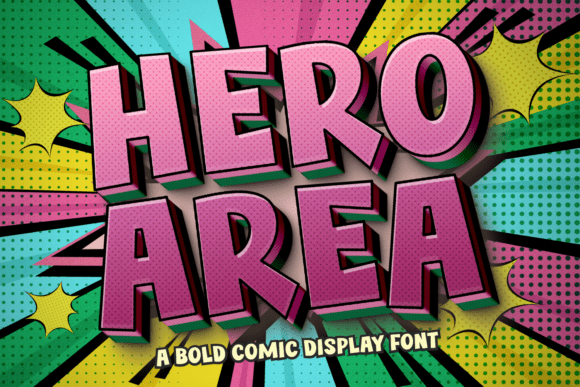
Unlike minimalist sans-serifs that dominate corporate interfaces, Hero Area is unapologetically loud. With its thick, blocky letterforms, dynamic shadows, and colorful pop art aesthetic, this typeface is engineered for impact. It represents a broader movement in design where personality and emotional resonance are prioritized over sterile neutrality. For entrepreneurs, freelancers, and creative directors, understanding how to leverage such a distinct typographic voice is no longer just about aesthetics—it is about effective communication in a noisy marketplace.
The Anatomy of Attention: Defining Hero Area
To understand why Hero Area resonates so strongly with contemporary audiences, one must look beyond its surface-level styling. At its core, this typeface is a masterclass in visual hierarchy. The exaggerated 3D effect and energetic styling are not merely ornamental; they serve a functional purpose by creating depth and focal points within a two-dimensional space. In graphic design, depth equates to importance. When a viewer encounters text set in Hero Area, the dimensional quality signals that the message is paramount, urgent, and exciting.
The font’s DNA is rooted in the golden age of comic books and mid-century advertising, yet it feels distinctly modern. This duality is intentional. The blocky structure provides excellent legibility at large sizes, making it perfect for comic book covers, posters, and hero sections on websites. However, the refined execution of the shadows and color integration ensures it does not look like a cheap imitation of vintage media. Instead, it offers a polished, professional interpretation of playfulness. This balance allows it to bridge the gap between niche geek culture and mainstream commercial appeal, making it a versatile tool for brands that want to appear approachable without sacrificing authority.
Nostalgia as a Strategic Business Asset
The rise of fonts like Hero Area coincides with a massive cultural shift toward nostalgia-driven marketing. Consumers, particularly Millennials and Gen Z, are increasingly drawn to brands that evoke a sense of comfort, fun, and shared cultural memory. We are seeing this trend permeate everything from fashion and packaging to tech startups and entertainment. In this context, typography acts as a shorthand for emotion.
When a brand utilizes Hero Area, it is tapping into decades of positive associations with adventure, heroism, and escapism. This is not accidental; it is a calculated response to consumer fatigue with hyper-minimalism. For years, the tech and corporate worlds have been dominated by flat, geometric typefaces designed for maximum neutrality. While functional, these fonts often lack soul. As markets mature, businesses are realizing that differentiation requires character. Hero Area provides an instant injection of personality that can transform a generic product launch into an event, or a standard social media post into a conversation starter.
For marketers and entrepreneurs, this means that choosing a display font is a business decision. It signals to the audience that the brand is confident enough to be playful and human. In sectors like gaming, entertainment, food and beverage, and lifestyle retail, this tonal shift can directly influence perception and engagement metrics. The font becomes a vehicle for storytelling, setting the stage before a single word of copy is read.
Adapting to New Workflows and Creator Economies
The relevance of Hero Area also ties directly into evolving creative workflows and the democratization of design. Today’s creators are often multidisciplinary; a freelance marketer might also be designing thumbnails, a small business owner might be creating their own packaging, and a content creator might be building merchandise lines. These users need assets that are high-impact but also intuitive to use.
Complex, delicate scripts or overly intricate display fonts often require advanced typographic manipulation to look good. They demand precise kerning, leading adjustments, and custom illustration to achieve a professional result. Hero Area, by contrast, is designed to perform out of the box. Its robust construction and built-in dimensional effects mean that even users with intermediate design skills can achieve a polished, studio-quality look quickly. This efficiency is crucial in the fast-paced environment of digital content creation where speed-to-market is essential.
Furthermore, the font aligns with the technical requirements of modern multi-platform branding. A typeface must work as well on a vertical TikTok video as it does on a horizontal YouTube banner or a printed convention poster. The bold weight and clear silhouettes of Hero Area ensure readability across varying screen resolutions and physical print sizes. This versatility reduces the need for multiple font variations, streamlining the asset management process for teams and solo creators alike.
Practical Applications in Contemporary Design
While Hero Area is undeniably distinctive, its true value lies in its application. Understanding where and how to deploy this typeface separates amateur usage from professional design strategy. Here are several practical contexts where this font excels:
- Event Branding and Signage: For festivals, conventions, and pop-up markets, clarity and excitement are paramount. Hero Area’s thickness ensures visibility from a distance, while its pop art aesthetic generates buzz and photo opportunities. It turns directional signage into branded touchpoints.
- Digital Hero Sections: True to its name, this typeface is ideal for the above-the-fold area of landing pages. When paired with clean body copy and ample whitespace, it creates a dynamic contrast that guides the user’s eye immediately to the value proposition or call to action.
- Merchandise and Apparel: The streetwear and indie merch markets thrive on bold graphics. Hero Area translates exceptionally well to screen printing and embroidery due to its solid forms. It allows creators to produce wearable graphics that feel like vintage collectibles rather than corporate promotional wear.
- Social Media Thumbnails and Overlays: In the algorithmic battle for clicks, text on images must be instantly readable. The heavy weight and contrasting shadows of Hero Area prevent text from getting lost against busy backgrounds, improving click-through rates for video content and articles.
- Packaging for Youth-Oriented Brands: Energy drinks, snacks, and hobbyist products benefit from the font’s kinetic energy. It communicates flavor, intensity, and fun more effectively than traditional serif or sans-serif packaging typography.
Balancing Exuberance with Usability
Despite its strengths, Hero Area is a specialized tool. Professional designers understand that a font with such a strong personality must be used with restraint. It is a headline font, not a body font. The key to successful implementation lies in pairing. To maintain readability and professional polish, Hero Area should be balanced with neutral, highly legible typefaces for supporting text. A clean geometric sans-serif or a sturdy slab serif often works best to ground the exuberance of the display face.
Additionally, color management is critical. Because the font already possesses significant visual weight through its 3D effects and blocky forms, introducing too many additional colors or complex textures can lead to visual clutter. Successful applications often rely on high-contrast duotones or limited palettes to let the letterform structure shine. This discipline ensures that the design remains accessible and does not overwhelm the viewer.
Accessibility should also remain a priority. While display fonts are exempt from some strict WCAG guidelines applied to body text, ensuring sufficient contrast between the Hero Area text and its background is essential for inclusive design. The built-in shadows can sometimes reduce contrast ratios if not managed carefully, so professionals should always test their color combinations to ensure the message is perceivable by all audience members.
The Future of Expressive Typography
The growing adoption of Hero Area is indicative of a larger trajectory in the design industry. We are moving away from the "one-size-fits-all" approach to digital typography and toward a more nuanced, expressive ecosystem. As variable fonts and color font technologies continue to evolve, we can expect display typefaces to become even more interactive and adaptable. However, the fundamental human desire for stories, characters, and emotional connection will remain constant.
Fonts like Hero Area succeed because they acknowledge that design is not just about organizing information; it is about creating experiences. For professionals, creators, and business leaders, embracing this type of bold typography is an acknowledgment of the changing expectations of their audience. It is a declaration that in a world of infinite scroll, stopping power matters. By integrating such vibrant, narrative-driven assets into their visual strategies, brands can forge deeper connections and stand out in an increasingly crowded digital landscape. The choice of typeface is ultimately a choice of voice, and in today's market, having a voice that resonates with energy and authenticity is a competitive advantage worth cultivating.