Simple Midnight: Evaluating Fit for Playful and Handwritten Design Projects
When selecting typography for projects that require warmth, nostalgia, or a personal touch, designers often navigate a crowded marketplace of handwritten display fonts. Simple Midnight occupies a specific niche within this category, distinguishing itself through a balance of quirky strokes and legible structure. Unlike distressed grunge scripts that prioritize texture over readability, or rigid geometric hand-lettering that lacks organic flow, Simple Midnight offers a carefree aesthetic that retains functional clarity. For creative professionals and hobbyists evaluating typeface options for children’s media, greeting cards, or approachable branding, understanding the specific mechanical and emotional attributes of this font is essential for making an informed selection.
Defining the Aesthetic Characteristics
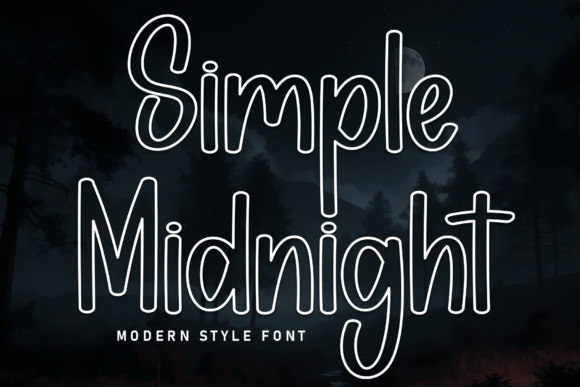
Simple Midnight is best categorized as a playful display font with strong handmade sensibilities. Its primary value proposition lies in its ability to mimic authentic human handwriting without sacrificing the consistency required for professional layout work. The letterforms exhibit a "dancing" baseline and varied stroke widths, which prevents the monotonous rhythm often found in lower-quality digital scripts. This variation creates a sense of movement and energy, making the text feel alive rather than stamped.
The charm of Simple Midnight stems from its imperfections. In typographic evaluation, these are not flaws but deliberate design choices intended to reduce formality. The characters possess rounded terminals and open counters, contributing to a friendly and non-threatening visual tone. This makes it particularly effective for audiences who respond to softness and approachability, such as young readers or consumers seeking artisanal authenticity. However, these same characteristics define its limitations; the decorative nature of the glyphs means it functions strictly as a display face, unsuitable for body copy or dense informational text.
Comparing Handwritten Styles: Where Simple Midnight Fits
To determine if Simple Midnight is the correct tool for a specific project, it is helpful to compare it against adjacent categories in the handwritten type spectrum. Designers typically choose between three distinct styles when seeking a personal feel:
- Authentic Script Fonts: These feature heavy ligatures, extreme slants, and complex connections. While elegant, they can be difficult to read at smaller sizes and often convey romance or luxury rather than playfulness.
- Distressed/Grunge Display: These fonts use erosion, ink blots, or rough edges to create a vintage or rebellious look. They excel in streetwear or retro designs but can feel too aggressive or messy for children’s books or cheerful branding.
- Clean Hand-Lettered Sans: These offer high legibility and modern simplicity but may lack the emotional resonance and unique personality required for storytelling or expressive packaging.
Simple Midnight sits comfortably between the clean sans and the authentic script. It offers more personality than a standard marker font but remains significantly more legible and versatile than a complex calligraphy script. If a project requires the text to be instantly readable by early readers or scanned quickly on retail packaging, Simple Midnight provides a safer middle ground than highly stylized alternatives. Conversely, if the design goal is high-end wedding stationery or historical reproduction, this font may appear too casual or contemporary.
Evaluating Use Cases and Practical Applications
The versatility of a display font is measured by how well it adapts to different media constraints. Based on its structural properties, Simple Midnight demonstrates particular strength in several key areas while presenting tradeoffs in others.
Children’s Books and Educational Materials
For illustrators and authors, typography must support literacy development. Simple Midnight’s open shapes and distinct character differentiation make it a viable candidate for titles, chapter headers, and pull quotes in children's literature. The "fun energy" described in its design brief aligns with the cognitive engagement needed for young audiences. However, evaluators should test the font at various point sizes. While excellent for large headings, the quirky strokes may lose definition when scaled down for caption text. In such cases, pairing Simple Midnight with a highly legible rounded sans-serif for body text creates a cohesive yet functional hierarchy.
Greeting Cards and Personal Stationery
This is perhaps the strongest fit for the typeface. The handmade feel bridges the gap between digital design and physical sentiment. When comparing options for greeting cards, Simple Midnight outperforms rigid scripts because it feels less corporate. It works exceptionally well for short phrases, names, and celebratory messages. Users should note that because the font bursts with personality, it commands attention; using it for every element on a card can create visual clutter. It is most effective when allowed ample whitespace to let the individual letterforms breathe.
Creative Branding and Packaging
In commercial contexts, Simple Midnight serves brands aiming for an artisanal, small-batch, or family-friendly identity. It is frequently evaluated for product labels, bakery signage, and boutique packaging. The tradeoff here involves scalability and reproduction. Intricate handwritten details can sometimes fill in during low-resolution printing or embossing. Before committing to this font for physical packaging, it is advisable to run print tests to ensure the quirky strokes maintain their integrity across different substrates and production methods. Digital applications, such as social media graphics and web headers, generally present fewer technical risks.
Technical Considerations and Decision Factors
Beyond aesthetics, practical decision-making requires assessing technical specifications and licensing. When researching Simple Midnight against other options, consider the following factors:
- Character Set Completeness: Verify that the font includes necessary punctuation, numerals, and special characters. Some playful display fonts omit these or render them inconsistently. If your project involves pricing, dates, or multilingual content, ensure Simple Midnight supports the required glyphs before purchase.
- OpenType Features: Check for alternate characters or swashes. High-quality handwritten fonts often include multiple variations of common letters to prevent repetition in longer words. If Simple Midnight includes these alternates, it significantly increases its utility for custom logotypes and headlines. If it lacks them, users may need to manually adjust spacing or swap characters to avoid visual redundancy.
- Licensing Scope: Display fonts often have tiered licensing. Confirm whether the license covers intended uses, such as e-book embedding, merchandise for sale, or broadcast advertising. Comparing the cost-per-use against project budgets is a necessary step in the evaluation process.
- Pairing Compatibility: Assess how the font interacts with your existing type library. Simple Midnight’s informal nature pairs best with simple, structured companions. Avoid combining it with other decorative or script fonts, as this competes for attention and reduces overall legibility.
Limitations and When to Choose Alternatives
No single typeface solves every design problem. Recognizing when Simple Midnight is not the right choice saves time and prevents poor design outcomes. Readers should consider alternative options in the following scenarios:
- High-Density Text: If the project involves paragraphs, instructions, or fine print, Simple Midnight will fatigue the reader. Opt for a dedicated text face with optimized x-heights and spacing.
- Corporate or Formal Tone: For legal documents, financial reports, or luxury heritage brands, the carefree letterforms may undermine credibility. A serif or traditional script conveys appropriate gravity.
- Minimalist Modernism: Designs relying on strict grids, Swiss style, or brutalism may clash with the organic irregularity of this font. Geometric sans-serifs are typically better suited for these aesthetics.
- Accessibility Requirements: While legible for a display font, handwritten styles inherently pose challenges for users with dyslexia or visual impairments. If accessibility is a primary compliance requirement, ensure Simple Midnight is used only decoratively and never for critical navigational or informational content.
Making the Final Selection
Choosing Simple Midnight ultimately depends on the specific emotional response you intend to evoke and the functional demands of the medium. It excels when the goal is to inject joy, friendliness, and a tangible human element into a design. Its distinct personality makes it a memorable choice for projects where standard typography feels sterile or impersonal.
However, successful implementation requires restraint and context awareness. By treating it as a specialized accent rather than a universal solution, designers can leverage its strengths while mitigating its limitations. Compare it directly against your project brief: Does the audience need approachability? Is the text volume low? Is the reproduction quality sufficient? If the answers align, Simple Midnight represents a robust option in the playful display category. If not, the market offers numerous alternatives tailored to different tonal and technical requirements. Thorough testing in the actual design environment remains the most reliable method for confirming fit before finalizing any typographic investment.