Toy Brick Font: Evaluating Fit for Playful Branding and Nostalgic Design
Selecting typography for projects targeting children or evoking nostalgia requires balancing aesthetic appeal with functional legibility. Toy Brick distinguishes itself in this niche by mimicking the physical geometry of classic interlocking blocks rather than simply applying a childish texture to standard letterforms. Its defining characteristic is the stacked, three-dimensional appearance that replicates the modular nature of plastic construction toys. For designers and marketers evaluating display fonts, understanding where Toy Brick succeeds—and where it falls short compared to other playful typefaces—is essential for making an informed selection.
Defining the Toy Brick Aesthetic and Structural Logic
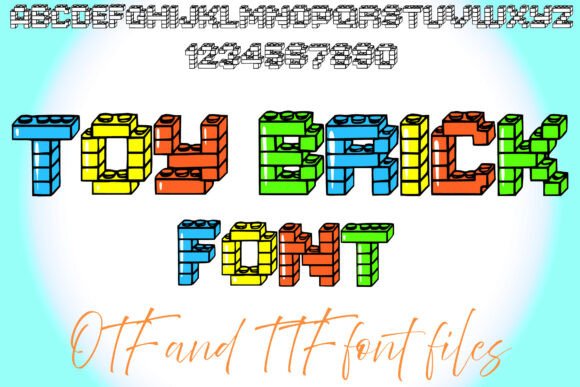
Unlike many novelty fonts that rely on hand-drawn irregularities or cartoonish distortion, Toy Brick is rooted in geometric precision. The letterforms are constructed from distinct rectangular units, creating a visual rhythm that mirrors actual brick assembly. This structural approach offers specific advantages for adult audiences seeking a mature take on playfulness. The font avoids the chaotic energy often associated with "kids' fonts," instead offering a sense of order and familiarity that resonates with adults who grew up with these toys.
The vibrant color variations often included with the font family are not merely decorative; they serve a semantic purpose. By assigning different hues to individual bricks within the letters, the typeface reinforces the concept of modularity and assembly. This makes it particularly effective for packaging design where the product itself involves building or creativity. However, this complexity also introduces technical considerations. When evaluating Toy Brick against simpler alternatives, one must consider whether the intricate detailing will survive reproduction at smaller sizes or on lower-resolution printing substrates.
Comparing Geometric Block Fonts vs. Hand-Lettered Styles
When researching options for birthday invitations or craft branding, buyers typically encounter two primary categories: structured geometric styles like Toy Brick and organic hand-lettered styles. Understanding the tradeoffs between these approaches helps clarify which tool fits the specific project scope.
- Visual Tone: Hand-lettered fonts suggest spontaneity, messiness, and youth. They work well for toddler-focused content or informal party invites. In contrast, Toy Brick suggests engineering, logic, and retro-modernism. It bridges the gap between child-centric themes and adult appreciation for design history.
- Legibility Factors: Organic scripts can sometimes suffer from poor character distinction, especially when customized. The rigid grid of Toy Brick generally maintains higher legibility in all-caps settings, though the 3D depth can reduce contrast if placed against busy backgrounds.
- Brand Longevity: Trends in hand-lettering cycle quickly. The blocky, pixel-adjacent aesthetic of Toy Brick aligns with enduring retro gaming and toy nostalgia trends, potentially offering a longer shelf life for brand identities.
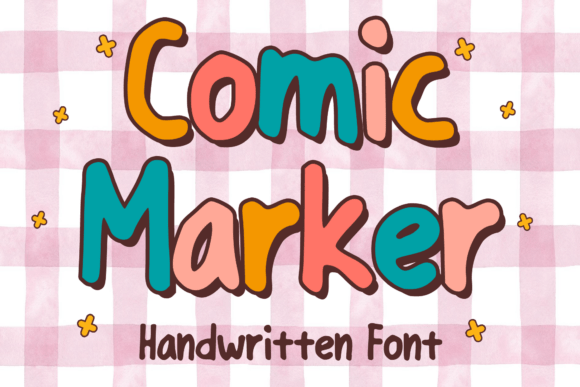
If the goal is to communicate softness or early-childhood development, a rounded sans-serif or marker style may be superior. If the objective is to evoke construction, creativity, or 80s/90s nostalgia, the architectural quality of Toy Brick provides a more authentic connection to those themes.
Evaluating Use Cases: Packaging, Events, and Digital Media
The versatility of any display font depends heavily on context. While Toy Brick is marketed for broad playful applications, its performance varies significantly across different media formats. Professionals should assess their primary deliverable before committing to this typeface.
Physical Packaging and Print Collateral
This is arguably the strongest environment for Toy Brick. On toy boxes, craft kit labels, and educational materials, the font’s 3D form factor complements product photography of physical blocks. The tactile suggestion of the type matches the tactile nature of the product. When comparing options for retail shelves, Toy Brick stands out because it reads as a graphic element rather than just text. It creates a pattern that attracts peripheral vision.
However, print production requires careful evaluation. The internal details of the "bricks" within the letters demand high-quality offset printing or crisp digital output. On textured paper or low-DPI home printers, these details may fill in, turning the clever block aesthetic into muddy blobs. For DIY crafters planning to print invitations at home, testing a sample at the intended size is a necessary step to ensure the 3D effect translates correctly.
Digital Interfaces and Web Typography
Using Toy Brick in digital environments presents a different set of challenges. As a web font, file size and rendering become critical decision factors. Complex multi-colored vector files can impact page load times, and browser rendering engines may struggle with the tight internal spacing of the brick patterns at small pixel dimensions.
For websites, Toy Brick is best reserved for large hero headers or specific call-to-action buttons. It should rarely be used for navigation or body copy. When comparing it to web-safe alternatives or variable fonts, Toy Brick lacks fluid responsiveness. It is a static display asset. If a project requires a cohesive typographic system across mobile and desktop interfaces, Toy Brick must be paired with a highly readable sans-serif companion to handle the functional heavy lifting.
Strengths, Limitations, and Decision Tradeoffs
No single typeface solves every design problem. An honest assessment of Toy Brick reveals specific strengths that justify its selection, alongside limitations that may necessitate looking elsewhere.
Where Toy Brick Excels
- Nostalgic Authenticity: It captures the specific cultural memory of construction toys without relying on trademarked logos. This allows brands to leverage nostalgia safely and effectively.
- Modular Customization: Because the letters are built from discrete shapes, designers can easily modify colors or rearrange elements to create custom logotypes without breaking the font's internal logic.
- Cross-Generational Appeal: It avoids being overly juvenile, making it suitable for products marketed to parents (adults) for their children, rather than directly to toddlers.
Potential Drawbacks and Alternatives
Despite these strengths, there are scenarios where Toy Brick is not the optimal choice. Recognizing these limitations prevents costly redesigns later in the process.
- Space Efficiency: The 3D extrusion and blocky proportions make this a wide, space-consuming typeface. For packaging with limited real estate or dense regulatory text, it may force awkward layout compromises. Condensed playful alternatives or inline block fonts might offer better spatial economy.
- Tonal Mismatch for Soft Topics: The hard edges and industrial origin of the block aesthetic can feel cold or aggressive for topics related to nurturing, wellness, or gentle parenting. Rounded, organic, or serif-based playful fonts convey warmth that geometric blocks cannot.
- Licensing Complexity: Multi-color fonts sometimes carry different licensing terms or technical requirements than standard OpenType fonts. Users must verify that their intended commercial use (e.g., embedding in an app vs. printing on a t-shirt) is covered, as some colorful display fonts have restricted EULAs compared to traditional typefaces.
Making the Final Selection
Choosing Toy Brick ultimately comes down to alignment between the font’s inherent personality and the project’s communication goals. It is a specialized tool designed for specific emotional triggers: construction, nostalgia, modularity, and vibrant play. When these attributes match the brief, few alternatives offer the same level of thematic coherence.
However, professionals should treat it as a headline actor, not a supporting cast member. Successful implementation relies on restraint—using the font to establish mood and theme while depending on complementary typefaces for information hierarchy and readability. By weighing the geometric precision and nostalgic value against the practical constraints of space and reproduction, designers can determine if Toy Brick is the right foundation for their next creative build or if a different stylistic approach will yield better long-term results.