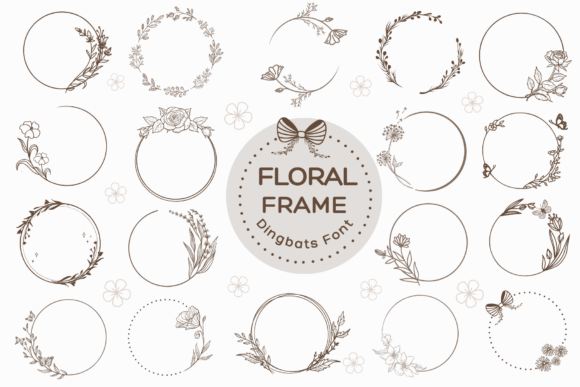
Floral Frame: Elevating Digital Design with Hand-Drawn Elegance
In an era dominated by minimalist aesthetics and rigid geometric grids, the resurgence of organic, hand-drawn elements represents a significant shift in visual communication. Designers and business owners are increasingly seeking ways to inject warmth and personality into digital assets without sacrificing professionalism. This is where Floral Frame distinguishes itself as more than just a decorative asset; it is a strategic typographic tool. As an elegant dingbat font featuring a variety of decorative wreaths and floral frames, it bridges the gap between traditional craftsmanship and modern vector workflows. Each glyph serves as a unique, hand-drawn frame ready to enhance designs with charm, offering a practical solution for creators who need bespoke ornamentation without the time investment of custom illustration.
The Evolution of Ornamental Typography in Modern Workflows
Historically, incorporating intricate floral borders or wreaths into a layout required sourcing separate image files, managing transparent PNGs, or hiring an illustrator for custom work. These methods often introduced friction into the creative process, creating compatibility issues across different software platforms or resulting in pixelation when scaling for large-format print. The evolution of the dingbat font format has transformed this workflow. By encapsulating complex illustrations within standard Unicode or OpenType glyphs, tools like Floral Frame allow designers to treat ornate graphics with the same flexibility as text.
This integration is particularly relevant as design workflows become more agile. Freelancers and agency teams operating under tight deadlines require assets that are instantly editable. When a decorative element is housed within a font file, changing the color, size, or opacity becomes as simple as adjusting text attributes. This seamless interoperability between typography and illustration reflects a broader industry trend toward unified design systems, where consistency and efficiency are paramount. For marketers and content creators, this means the ability to iterate on social media templates or email headers rapidly while maintaining a cohesive, high-end aesthetic.
Balancing Automation with Authentic Craftsmanship
A defining characteristic of current design trends is the tension between AI-generated imagery and human-made art. While generative tools can produce endless variations of botanical patterns, they often lack the intentional imperfections that signal authenticity. Audiences, particularly in the wedding, lifestyle, and artisanal sectors, have developed a keen eye for synthetic visuals. They crave the tactile quality of hand-drawn lines.
Floral Frame addresses this market preference by digitizing genuine hand-drawn artwork rather than algorithmically generating patterns. The slight variations in line weight and the organic flow of the wreaths communicate a level of care that automated tools struggle to replicate. For entrepreneurs building personal brands or small businesses emphasizing sustainability and craft, using a typeface rooted in manual artistry reinforces their brand narrative. It signals to the consumer that the business values human touch, even in its digital presentation. This alignment between visual style and brand values is essential for establishing trust and emotional connection in a saturated marketplace.
Practical Applications Across Creative Disciplines
The versatility of a floral dingbat font extends far beyond simple decoration. Its utility lies in its ability to solve specific layout challenges across various mediums. Understanding these applications helps professionals maximize the return on investment when licensing such assets.
- Custom Monogram Creation: Instead of searching for pre-made monogram templates that thousands of others use, designers can combine standard serif or script typefaces with Floral Frame glyphs to create proprietary logo marks. The wreath acts as a container, grounding the initials and providing immediate context, whether for luxury stationery or social media avatars.
- Event Stationery and Invitations: The wedding and event industry relies heavily on framing devices to guide the viewer’s eye. Using a font-based frame ensures that the decorative border scales perfectly from a 5x7 invitation to a massive welcome sign without loss of fidelity. It also allows for last-minute text edits without needing to redraw the surrounding artwork.
- Digital Content and Social Media: Influencers and bloggers often need to highlight quotes or key takeaways. A floral frame provides a natural "container" for text overlays on photographs, separating the message from the background image while adding thematic relevance. This is especially effective for seasonal content where floral motifs align with spring or summer campaigns.
- Product Packaging and Labels: Small batch producers, such as candle makers or skincare brands, can utilize these frames to create label boundaries that feel premium yet approachable. The hand-drawn nature of the glyphs softens the clinical appearance of regulatory text or ingredient lists.
Enhancing Visual Hierarchy and Readability
Beyond aesthetics, decorative frames serve a critical functional role in information architecture. In dense layouts, such as educational worksheets, menus, or certificates, visual fatigue is a genuine concern. Frames act as cognitive anchors, segmenting content into digestible chunks. When a designer employs a Floral Frame glyph to enclose a section header or a special offer, they are utilizing gestalt principles of closure to group related information.
This technique improves scannability and retention. However, restraint is necessary. Because each glyph in Floral Frame is detailed, overuse can lead to visual clutter. The most effective implementations treat these frames as structural elements rather than mere background noise. Pairing the intricate details of the floral wreaths with ample negative space and clean, sans-serif body copy creates a balanced composition that feels both elegant and legible. This balance is crucial for accessibility; high-contrast, uncluttered designs ensure that the decorative elements enhance rather than hinder the user experience.
Technical Considerations for Professional Implementation
To fully leverage the capabilities of Floral Frame, users must understand the technical nuances of dingbat fonts. Unlike standard alphanumeric typefaces, dingbats map illustrations to specific keystrokes. Professionals should familiarize themselves with the character map or glyph panel in their design software to access the full range of available wreaths and frames. Relying solely on keyboard typing may limit discovery of alternate styles or hidden gems within the font family.
Licensing is another critical factor for commercial users. While the font facilitates rapid creation, ensuring proper usage rights for client work, merchandise, or web embedding is non-negotiable. Business owners and freelancers must verify that their license covers the intended end-use, particularly for products where the frame constitutes a primary value component, such as printed greeting cards or digital templates for resale. Respecting intellectual property not only mitigates legal risk but also supports the independent type designers who create these specialized tools.
Furthermore, color management plays a pivotal role in how these frames are perceived. Because the source art is hand-drawn, applying flat, solid colors can sometimes flatten the depth of the illustration. Experimenting with gradients, textures, or subtle drop shadows can restore dimensionality. However, designers should remain mindful of output requirements; a textured frame that looks stunning on screen may reproduce poorly on low-quality office printers. Testing across intended media ensures the elegance of Floral Frame translates effectively from the digital canvas to the physical product.
Future-Proofing Design Assets
As design trends continue to cycle between minimalism and maximalism, possessing a library of timeless, versatile assets is a sound business strategy. Floral motifs, when rendered with artistic integrity, possess a perennial quality that transcends fleeting fads. Unlike hyper-stylized graphic packs that date quickly, hand-drawn floral frames maintain relevance across decades. Investing in high-quality typographic tools like Floral Frame is an investment in long-term creative capacity.
Moreover, as cross-platform consistency becomes increasingly important for brand identity, font-based assets offer superior portability compared to raster images. A brand guideline document that specifies a particular Floral Frame glyph for certification badges or testimonial highlights ensures that every team member, regardless of their software proficiency, can produce on-brand materials. This standardization reduces quality control friction and empowers non-designers within an organization to create visually competent content.
Ultimately, the value of Floral Frame lies in its dual nature as both an artistic expression and a utilitarian instrument. It acknowledges the modern creator's need for speed and scalability while honoring the enduring appeal of botanical illustration. By integrating such tools thoughtfully, designers and businesses can cultivate a visual identity that feels curated, human, and distinctly memorable in an automated world. Whether crafting a luxury wedding suite or a boutique e-commerce banner, the deliberate application of these hand-drawn frames transforms standard layouts into engaging experiences that resonate with audiences seeking beauty and authenticity.