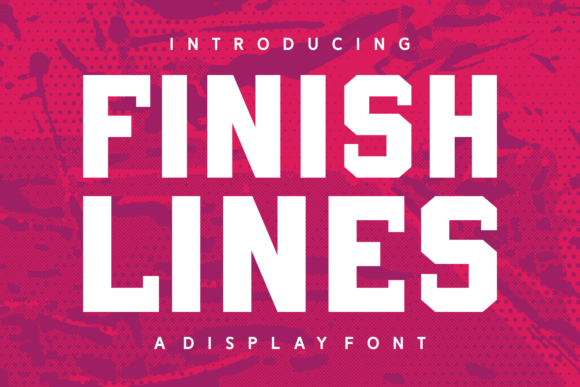
Finish Lines: Elevating Modern Design with a Versatile Typeface Ensemble
In the crowded landscape of digital and print design, typography often serves as the silent ambassador of brand identity. While imagery captures immediate attention, it is the typeface that sustains engagement, guides readability, and establishes emotional resonance. Enter Finish Lines, an incredibly versatile ensemble of typefaces designed to meet the multifaceted demands of contemporary creative work. No matter the topic or medium, this font family has emerged as an incredible asset for modern libraries, possessing the distinct potential to elevate any creation from functional to memorable.
The relevance of Finish Lines extends beyond mere aesthetic appeal. It addresses a critical pain point in current design workflows: the need for cohesion across fragmented media. As creators navigate between social media graphics, long-form editorial content, user interfaces, and environmental signage, the friction of switching between disparate font families can disrupt visual harmony. Finish Lines operates as a unified system, offering enough stylistic variation to handle diverse hierarchies while maintaining a consistent DNA. This adaptability makes it particularly valuable for professionals who must deliver high-quality work under tight deadlines without sacrificing typographic integrity.
The Evolution of Typographic Versatility
To understand why an ensemble like Finish Lines is gaining traction, one must look at how design consumption has shifted over the last decade. We have moved away from the era of single-purpose display fonts toward a preference for robust, multi-weight systems. The modern reader interacts with content across devices with varying screen densities, aspect ratios, and viewing distances. A typeface that looks striking on a desktop monitor may fail legibility tests on a mobile device or lack the necessary gravitas in print.
Finish Lines represents the maturation of this "system-first" approach to type design. Rather than being a singular style, it functions as a toolkit. This evolution mirrors broader changes in creative technology, where variable fonts and responsive design have become standard expectations. Designers are no longer looking for a font that solves one specific problem; they are seeking partners in communication that can flex alongside their content strategies. By providing a spectrum of weights and styles that feel inherently related, Finish Lines reduces the cognitive load on both the designer and the end-user, creating a seamless reading experience that feels intentional rather than assembled.
Aligning with Modern Workflow Demands
Efficiency is the currency of the modern creative economy. Freelancers, agency teams, and in-house marketers are frequently tasked with producing volume without losing specificity. In this context, the utility of a versatile typeface cannot be overstated. When a designer selects Finish Lines for a project, they are effectively future-proofing their asset library. The ability to use a single family for headlines, subheads, body copy, and captions streamlines the decision-making process.
This efficiency does not come at the cost of expression. On the contrary, by removing the technical friction of font pairing, creators can focus more energy on layout, spacing, and narrative flow. For entrepreneurs and small business owners managing their own branding, this versatility acts as a built-in art director. It provides guardrails that prevent common typographic errors, such as clashing x-heights or inconsistent stroke widths, ensuring that marketing materials maintain a professional polish regardless of who creates them.
Practical Applications Across Industries
The true test of any typeface ensemble is its performance in real-world scenarios. Finish Lines distinguishes itself through its chameleon-like ability to adapt to different tonal requirements while retaining its core character. Its utility spans several key sectors where communication clarity is paramount.
- Editorial and Publishing: For bloggers, journalists, and digital publishers, readability is non-negotiable. Finish Lines offers optimized proportions for extended reading sessions, reducing eye strain while maintaining enough personality to distinguish a publication’s voice. The contrast between its heavier weights for titles and lighter weights for body text creates a natural rhythm that keeps readers engaged through long-form content.
- Brand Identity and Marketing: Marketers require typefaces that can scale from a favicon to a billboard. The structural integrity of Finish Lines ensures that logos remain crisp at small sizes while headlines retain impact at large scales. Its neutral yet distinctive nature allows it to support various brand personalities, from tech-forward startups to established heritage brands, without overpowering the message.
- User Interface and Product Design: In UI/UX design, legibility and hierarchy are functional requirements. Finish Lines provides clear differentiation between interactive elements and static content. Its open apertures and balanced spacing contribute to accessibility standards, making digital products more usable for people with visual impairments or those navigating in suboptimal lighting conditions.
- Educational and Instructional Content: Educators and instructional designers benefit from the typeface’s clarity. Whether designing course materials, presentation slides, or e-learning modules, the ensemble’s structured forms help organize complex information. The variety of weights allows for effective signposting, guiding learners through content logically and reducing cognitive overload.
Navigating Current Design Trends
Current design trends favor authenticity and functional minimalism over decorative excess. There is a growing fatigue with hyper-stylized display fonts that sacrifice usability for novelty. Audiences today value clarity and transparency, and typography plays a significant role in signaling these values. Finish Lines aligns with this shift by prioritizing form-follows-function principles without becoming sterile.
Furthermore, the rise of dark mode and dynamic theming in digital interfaces has placed new demands on type color and weight. Fonts designed solely for white backgrounds often appear too thin or spindly when inverted. A well-constructed ensemble like Finish Lines accounts for these luminance shifts, ensuring that text maintains appropriate contrast and perceived weight across different background colors. This attention to technical detail is what separates a trendy font from a lasting design tool.
Strategic Considerations for Implementation
While Finish Lines is undeniably versatile, maximizing its potential requires thoughtful application. Adding a new typeface to your library is an investment, and like any investment, it yields the best returns when used strategically. Professionals should consider the following when integrating this ensemble into their workflow.
Establish a Typographic Scale Early. Because the family offers numerous weights, it is tempting to use all of them. However, restraint often leads to stronger design. Define a strict hierarchy using three or four specific weights before beginning layout work. This discipline ensures consistency and prevents the design from looking cluttered.
Test Across Intended Mediums. Versatility implies capability, not universal perfection. Always proof your type choices in the actual environment where they will be consumed. What works beautifully in a PDF proposal may need adjustment for a mobile app interface. Utilize the full range of the Finish Lines ensemble to find the specific weight that optimizes legibility for each unique context.
Pair with Intention. Although Finish Lines is comprehensive enough to stand alone, it also pairs exceptionally well with specialized display faces or monospaced code fonts. When combining typefaces, let Finish Lines serve as the stabilizing anchor. Its balanced proportions provide a solid foundation that allows more expressive secondary fonts to shine without creating visual chaos.
The Long-Term Value of a Core Typeface
In an industry obsessed with the new, there is profound value in cultivating a deep familiarity with a core set of tools. Constantly chasing the latest trending font can lead to disjointed portfolios and inconsistent brand experiences. Adopting Finish Lines as a staple in your typographic arsenal allows for the development of muscle memory and intuitive usage patterns.
Over time, this familiarity translates into speed and confidence. You begin to understand the nuances of the letterforms, knowing instinctively which weight will work for a caption versus a pull quote. This mastery is what ultimately elevates creation. The font ceases to be just a collection of vectors and becomes an extension of your creative intent. For businesses, this consistency builds trust; for individual creators, it builds a recognizable signature style.
Ultimately, the introduction of Finish Lines to the market is a response to the complexities of modern communication. It acknowledges that designers and content creators are juggling more variables than ever before. By offering a solution that balances aesthetic flexibility with rigorous functional performance, it empowers users to focus on what matters most: the message itself. Whether you are crafting a corporate annual report, designing a personal blog, or building a scalable design system, this ensemble provides the typographic infrastructure necessary to succeed. It is not merely a font to be installed, but a resource to be leveraged, promising to remain a relevant and powerful asset in your creative library for years to come.