Expression Font: A Practical Guide to Soft, Versatile Typography
In the vast landscape of digital typography, finding a typeface that balances aesthetic beauty with functional versatility is often a challenge for designers and business owners alike. Expression Font has emerged as a notable solution for creatives seeking a typeface that feels both organic and intentional. Designed with a soft, unique touch, this font family offers distinctive strokes that impart a special character to any project. Unlike rigid geometric sans-serifs or overly ornate scripts, Expression occupies a valuable middle ground, making it meaningful and adaptable for future use across various media.
This guide explores the practical applications, design characteristics, and strategic considerations for integrating Expression Font into your creative workflow. Whether you are crafting a brand identity, designing packaging, or creating digital content, understanding the nuances of this natural font style will help you determine if it aligns with your specific communication goals.
The Design Philosophy Behind Expression
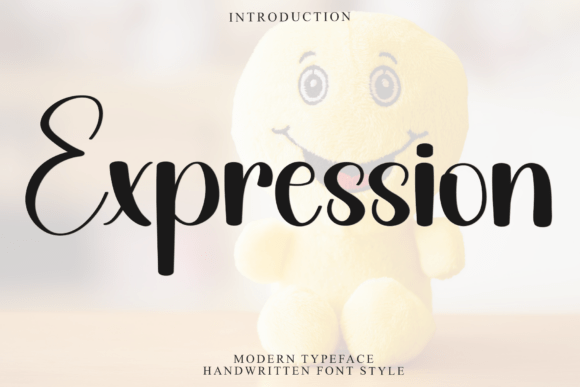
To effectively utilize Expression Font, one must first understand its visual DNA. The typeface is defined by its "soft touch," a quality achieved through carefully modulated stroke terminals and open counters. In typographic terms, this means the ends of the letterforms are rounded or gently tapered rather than sharply cut, and the internal spaces within letters like 'a', 'e', and 'o' are generous. This construction creates a sense of approachability and warmth that is difficult to replicate with standard system fonts.
The distinctive strokes mentioned in its description serve a dual purpose. Aesthetically, they provide a handcrafted feel that suggests human involvement and artisanal quality. Functionally, these unique characteristics create a strong visual rhythm when set in headlines or short blocks of text. For general consumers and professionals, this translates to a design element that feels premium yet accessible. It avoids the coldness of corporate minimalism while steering clear of the illegibility that sometimes plagues decorative display fonts.
Evaluating Visual Tone and Brand Alignment
Before downloading or purchasing, consider the emotional resonance required for your project. Expression Font excels in contexts where empathy, nature, creativity, or luxury are central themes. Its natural font style makes it particularly effective for:
- Wellness and Beauty Brands: The soft curves mirror organic forms, making it ideal for skincare packaging, spa signage, or holistic health websites.
- Artisanal Food and Beverage: Craft breweries, boutique bakeries, and farm-to-table restaurants benefit from the font’s handmade aesthetic.
- Creative Portfolios: Photographers, illustrators, and writers can use Expression to frame their work without competing with the visual content itself.
- Children’s Products: The gentle, non-aggressive letterforms are welcoming for educational materials, toys, and nursery decor.
Conversely, if your project requires conveying industrial strength, technological precision, or urgent authority, Expression may not be the primary choice. Understanding these boundaries ensures the font enhances rather than undermines your message.
Technical Compatibility and Platform Integration
A beautiful font is only useful if it works reliably across your intended platforms. One of the significant strengths of Expression Font is its broad compatibility. It is engineered to function seamlessly on Windows environments and open-source platforms, reducing friction for collaborative teams and freelancers who may operate across different operating systems.
For professional designers working in Adobe Creative Cloud, Affinity Designer, or CorelDRAW, Expression integrates smoothly into existing workflows. However, its utility extends beyond professional software. Because of its versatile character set, it is also suitable for:
- Desktop Publishing: Creating brochures, flyers, and business cards using tools like Canva or Microsoft Publisher.
- Crafting Software: Users of Cricut Design Space or Silhouette Studio will find the distinct strokes cut cleanly on vinyl and paper, making it perfect for DIY projects and custom merchandise.
- Web Design (with caution): While primarily a display font, Expression can be implemented via web font services for headings. Always test rendering across browsers to ensure the soft details remain crisp on various screen resolutions.
This cross-platform reliability makes Expression a pragmatic choice for businesses that need consistent branding across print, digital, and physical product touchpoints.
Character Set and Linguistic Versatility
The mention of "various characters" in the font's specification is a critical detail for international or multilingual projects. A robust character set ensures that accented characters, ligatures, and special symbols maintain the same stylistic integrity as the base alphabet. When evaluating Expression for a specific campaign, verify that it includes the necessary glyphs for your target language. This attention to detail prevents the jarring visual inconsistency that occurs when a designer is forced to mix two different typefaces to cover missing characters.
Practical Applications in Real-World Scenarios
Theory aside, how does Expression Font perform in actual production environments? Its versatility shines when applied to tangible products and digital experiences. Below are three scenarios illustrating its practical value.
Scenario 1: Product Packaging Redesign
A small business selling organic honey needed to differentiate itself from competitors using generic serif fonts. By adopting Expression Font for the product name and key descriptors, the brand immediately communicated "natural" and "hand-poured." The soft strokes complemented the matte texture of the label stock, creating a cohesive tactile experience. Sales data later indicated that customers frequently cited the packaging's "friendly" appearance as a deciding factor at the point of sale.
Scenario 2: Event Stationery Suite
For a wedding stationer, legibility and elegance are paramount. Expression served as the primary display typeface for invitations and place cards. Its unique character provided the necessary personality to avoid looking template-generated, yet its clean construction ensured guests could easily read names and table assignments. The font’s compatibility with cutting machines allowed the designer to create matching acrylic welcome signs without needing to redraw letterforms manually.
Scenario 3: Social Media Content Creation
A lifestyle influencer sought to establish a recognizable visual identity across Instagram and Pinterest. Using Expression Font for quote overlays and story highlights created instant brand recognition. The font’s distinctiveness meant that even without a logo present, followers could identify the content source. Because the font renders well at various sizes, it remained legible on mobile screens while retaining its artistic flair.
Best Practices for Pairing and Hierarchy
To maximize the impact of Expression Font, it should rarely be used in isolation. Effective typography relies on contrast. Since Expression possesses a strong personality, pair it with neutral, highly legible typefaces for body copy. Excellent pairing partners include:
- Geometric Sans-Serifs: Fonts like Montserrat or Futura provide a modern counterpoint to Expression’s organic softness.
- Traditional Serifs: Typefaces like Merriweather or Lora add editorial credibility and improve reading comfort for longer texts.
- Monospaced Fonts: For a contemporary, eclectic look, pairing Expression with a monospace font can highlight its fluidity through stark contrast.
Important Consideration: Avoid pairing Expression with other decorative or script fonts. Competing personalities create visual noise and reduce comprehension. Let Expression be the star of the hierarchy, using supporting typefaces to facilitate information delivery.
Limitations and Strategic Considerations
While Expression Font is a powerful tool, honest evaluation requires acknowledging its limitations. As a display typeface with unique strokes, it is generally unsuitable for extended body text. Setting paragraphs in Expression can cause reader fatigue due to the irregular rhythm and softer contrast. Reserve it for headlines, subheads, logos, pull quotes, and short captions.
Additionally, consider the reproduction method. The "soft touch" and fine details that define Expression may be lost in low-resolution printing or extremely small sizes. If you are designing for newsprint, embroidered textiles, or favicon-sized digital assets, test the font at actual size before finalizing. In some cases, a heavier weight or slight tracking adjustment may be necessary to preserve legibility.
Licensing is another practical consideration. Always verify the specific license terms for Expression Font regarding commercial use, web embedding, and merchandise. Ensuring compliance protects your business and supports the type designer’s continued creation of high-quality tools.
Making the Final Decision
Expression Font represents more than just a collection of letterforms; it is a strategic design asset that communicates softness, authenticity, and creativity. Its compatibility with Windows and open-source platforms, combined with its extensive character set, makes it a reliable choice for professionals and hobbyists alike. By understanding its strengths in branding, packaging, and digital media—and respecting its limitations in body text and small-scale reproduction—you can leverage this typeface to create designs that resonate deeply with diverse audiences.
Ultimately, the decision to use Expression should be driven by your project’s need for a human-centric, visually distinct voice. When applied thoughtfully, it transforms ordinary text into an engaging visual experience, proving that typography is not merely about reading, but about feeling. For creators seeking to enhance their work with a natural, appealing aesthetic, Expression Font stands ready as a versatile and meaningful partner in the creative process.