Evaluating Honey Notes: A Practical Guide to Warm, Handwritten Script Typography
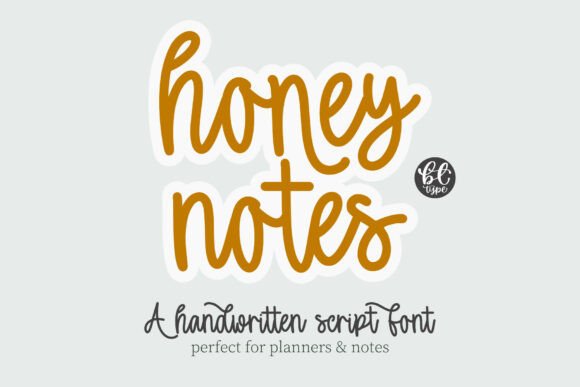
Selecting the right typeface for personal projects or boutique branding often involves balancing aesthetic appeal with functional legibility. While many script fonts prioritize elaborate flourishes at the expense of readability, Honey Notes occupies a distinct middle ground designed for practical application. It is a handwritten script font characterized by thick, rounded letterforms and smooth connections that mimic confident, casual handwriting rather than formal calligraphy. For designers, planners, and content creators aged 20 to 50, understanding where this specific typeface fits within the broader typography landscape is essential for making informed design decisions.
Honey Notes distinguishes itself through a "cozy" visual texture. Unlike traditional copperplate scripts that rely on high contrast between thick and thin strokes, this typeface maintains a consistent, bold weight. This structural choice creates a sense of warmth and approachability, making it particularly effective for digital scrapbooking, social media graphics, and personalized stationery. However, its unique characteristics also present specific tradeoffs when compared to other script categories. Evaluating these factors helps determine whether Honey Notes is the optimal resource for your current project or if an alternative style would better serve your needs.
Distinguishing Characteristics and Visual Tone
The primary differentiator of Honey Notes is its emphasis on legibility without sacrificing the organic feel of hand-lettering. Many display scripts fail in body text or smaller captions because their intricate details become muddy at reduced sizes. Honey Notes addresses this through bold, rounded geometry. The letterforms are constructed to remain distinct even when scaled down for planner stickers or packaging labels. This makes it a versatile tool for users who need a single font family to handle both headlines and secondary text elements.
The tone conveyed by this typeface is intentionally friendly and comforting. In typographic psychology, rounded terminals and uniform stroke widths are associated with safety, youthfulness, and accessibility. This contrasts sharply with sharp-edged serifs or high-contrast didones, which communicate luxury, authority, or tradition. When evaluating Honey Notes against other options, consider the emotional response you intend to evoke. If your goal is to create a sense of intimacy, as seen in journaling communities or children’s educational content, this font aligns well with those objectives. Conversely, if the project requires corporate gravitas or minimalist sophistication, the inherent playfulness of Honey Notes may clash with the intended brand identity.
Technical Accessibility and Customization
Beyond aesthetics, technical implementation plays a significant role in font selection. Honey Notes is PUA-encoded (Private Use Area), a feature that significantly impacts workflow efficiency. PUA encoding allows users to access alternate characters, swashes, and ligatures directly through standard character maps or glyph panels without requiring specialized OpenType-savvy software. For creators using tools like Canva, Cricut Design Space, or Silhouette Studio, this accessibility removes friction from the customization process.
When comparing resources, verify how alternate glyphs are accessed in competing fonts. Some older or free script fonts bury these features behind complex OpenType coding that basic design software cannot interpret. If your workflow relies heavily on quick customization—such as swapping a standard 'a' for a swash version in a sticker design—the PUA encoding in Honey Notes offers a tangible productivity advantage over technically restrictive alternatives.
Comparative Analysis: Honey Notes vs. Alternative Styles
To make a balanced decision, it is helpful to compare Honey Notes against three common categories of script typography. Each category serves different functional needs and aesthetic goals.
- Formal Calligraphy Scripts: Fonts in this category typically feature dramatic stroke variation and extensive connecting ligatures. They excel in wedding invitations and luxury branding but often suffer from poor readability in long-form text or small formats. Honey Notes sacrifices this level of ornate elegance for superior clarity and a more casual, everyday utility.
- Messy/Scratchy Handwriting Fonts: These typefaces mimic unpolished, rapid note-taking. While they offer high authenticity, they can appear chaotic or unprofessional in commercial contexts. Honey Notes provides a curated version of handwriting that feels genuine yet tidy, making it safer for product packaging and public-facing social media content where clarity is paramount.
- Geometric Sans-Serif Scripts: Modern monoline scripts share the uniform weight of Honey Notes but often lack the organic connection points. They can feel sterile or overly digital. Honey Notes retains the fluid connectivity of analog writing, offering a warmer alternative for projects that require modern cleanliness without mechanical coldness.
This comparison highlights that Honey Notes is not a universal replacement for all scripts. It is a specialized solution for scenarios requiring a blend of bold visibility, friendly tone, and functional legibility.
Strengths and Ideal Use Cases
The bold weight and rounded forms of Honey Notes make it exceptionally strong in specific applications. Understanding these best-fit situations prevents misuse and maximizes the font's value.
- Planner Stickers and Digital Stationery: The thickness of the letterforms ensures that text remains crisp when printed at small sizes or cut on vinyl plotters. Thin scripts often tear during weeding or pixelate in digital planners; Honey Notes mitigates these production risks.
- Children’s Content and Education: The rounded, non-threatening aesthetic supports early literacy materials and kid-focused branding. The legibility aids recognition, while the playful style maintains engagement without appearing childish to adult purchasers.
- Social Media Overlays: On platforms like Instagram or Pinterest, text must be readable against busy backgrounds. The solid weight of Honey Notes provides sufficient contrast and presence, reducing the need for heavy drop shadows or outlines that can clutter a design.
- Artisan Packaging: For candle makers, bakers, and crafters, the font communicates "handmade" quality without looking amateurish. It bridges the gap between professional typesetting and personal touch.
Limitations and Decision Factors
No typeface is without limitations, and recognizing where Honey Notes falls short is as important as knowing its strengths. Being aware of these constraints allows for more strategic resource allocation.
Limited Formal Versatility: Due to its inherently cozy and rounded nature, Honey Notes is difficult to adapt for formal or corporate environments. Attempting to use it for legal documents, financial reports, or high-end fashion editorials will likely result in tonal dissonance. In these cases, a transitional serif or a refined copperplate script remains the superior choice.
Space Consumption: Bold, rounded scripts naturally occupy more horizontal and vertical space than condensed or thin-weight alternatives. When designing for tight layouts, such as narrow sidebar widgets or dense data tables, Honey Notes may force awkward line breaks or reduced sizing that negates its legibility benefits. Always test the font in the actual layout dimensions before committing to it.
Stylistic Repetition: Because Honey Notes has a distinct personality, overuse across multiple projects can lead to visual fatigue. Unlike neutral sans-serifs that recede into the background, this font demands attention. If you are building a comprehensive brand system, consider pairing Honey Notes with a simple, clean sans-serif or serif for body copy to prevent the overall design from feeling overwhelming.
Making the Final Selection
Choosing Honey Notes should be a deliberate decision based on project requirements rather than trend adherence. Ask the following evaluative questions before licensing or downloading:
- Does the project require a warm, approachable tone rather than authoritative or luxurious messaging?
- Will the text be displayed at sizes where thin strokes might disappear or break?
- Is easy access to alternates necessary for my specific software workflow?
- Does the target audience value authenticity and comfort over precision and formality?
If the answer to these questions is affirmative, Honey Notes represents a strong candidate. It offers a reliable balance of charm and function that many decorative scripts lack. However, if your project demands high-density information display, formal elegance, or neutral versatility, exploring alternatives in the serif or monoline categories may yield better long-term results.
Ultimately, typography is a tool for communication. Honey Notes excels at communicating warmth, personality, and accessibility. By understanding its specific niche within the typographic ecosystem, designers and creators can leverage its strengths effectively while avoiding common pitfalls associated with mismatched font selection. Whether used for a digital planner, a product label, or a social media campaign, its success depends entirely on alignment between the font’s inherent character and the project’s communicative goals.