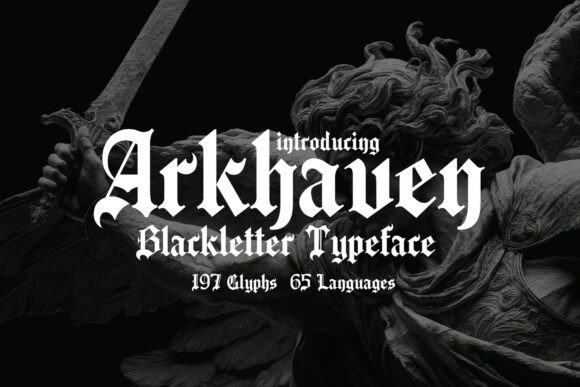
Arkhaven: Elevating Design with Authentic Gothic Typography
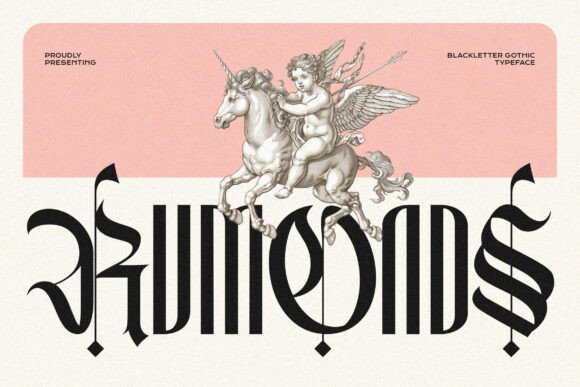
In the vast landscape of digital typography, finding a blackletter typeface that balances historical authenticity with modern legibility is a persistent challenge for designers. Many gothic fonts lean too heavily into illegible caricature or lack the refined details necessary for professional branding. Arkhaven emerges as a definitive solution to this dilemma. It is an epic and beautiful gothic blackletter typeface that bridges the sacred and the sublime, offering a sophisticated alternative for creatives who demand both atmosphere and functionality. Inspired by the majestic lettering of Old English manuscripts, cathedral inscriptions, and ancient tomes, Arkhaven radiates both power and grace, making it an essential tool for projects requiring a timeless, mysterious, or spiritual essence.
Solving the Legibility vs. Atmosphere Conflict
The primary hurdle in using medieval-style typography is readability. Traditional Textura or Fraktur styles, while historically accurate, often fail in contemporary media because their dense texture makes them difficult to parse at smaller sizes or on screens. Designers frequently face the choice between sacrificing aesthetic impact for clarity or choosing a decorative font that looks amateurish.
Arkhaven addresses this friction point through its refined serifs, ornate curves, and dramatic contrast. Unlike rougher, distressed grunge fonts that mimic decay, Arkhaven offers a polished elegance. This refinement ensures that the typeface remains legible in headlines, logos, and short body text without losing its medieval soul. For designers tasked with creating fantasy book covers or historical branding, this balance is crucial. It allows the audience to engage with the content immediately while still being transported to a specific era or mood. The font does not just decorate the page; it communicates effectively while setting a profound tone.
Global Storytelling and Technical Versatility
A common limitation in niche display fonts is poor language support, which restricts global storytelling and localization efforts. A designer might fall in love with a typeface only to discover it lacks the diacritics needed for French, German, or Nordic languages. Arkhaven eliminates this barrier with support for 65 languages and a comprehensive set of 197 glyphs.
This technical breadth transforms Arkhaven from a novelty item into a versatile workhorse. For publishers and game developers, this means consistent branding across international markets without needing to swap typefaces mid-project. The inclusion of extensive glyphs also provides access to ligatures, alternates, and punctuation marks that are essential for high-end typesetting. When designing elegant invitations or album artwork, these subtle typographic nuances prevent awkward spacing and ensure the final product feels bespoke rather than generic. This level of support indicates that Arkhaven was engineered for practical application, not just visual showcase.
Practical Applications Across Creative Disciplines
Understanding where and how to deploy Arkhaven is key to maximizing its impact. Because it carries such distinct weight and personality, it functions best as a focal point rather than a background element. Below are specific scenarios where this typeface excels:
- Fantasy and Historical Publishing: Use Arkhaven for chapter titles, drop caps, and cover treatments. Its connection to ancient tomes lends immediate credibility to world-building narratives.
- Heritage Branding: Breweries, artisanal crafts, and law firms seeking to convey tradition and longevity can utilize Arkhaven in logotypes. The font suggests stability and history without appearing outdated.
- Music and Entertainment: Metal, folk, and classical genres benefit from the typeface’s dramatic contrast. It works exceptionally well on vinyl sleeves and concert posters where visual hierarchy is paramount.
- Ceremonial Stationery: For weddings or formal galas, Arkhaven provides a regal alternative to standard scripts. Its structured geometry offers a masculine or neutral counterpoint to flowing calligraphy.
Implementation Strategies for Different Users
Different creative professionals will approach Arkhaven with varying objectives. Recognizing these distinct needs helps in leveraging the font's full potential.
For Graphic Designers and Brand Strategists
Your goal is instant recognition and emotional resonance. When using Arkhaven for logos, focus on the negative space within the ornate curves. The font’s dramatic contrast creates natural visual interest, so avoid adding excessive effects like shadows or glows that clutter the design. Pair Arkhaven with a clean, geometric sans-serif for supporting text. This juxtaposition highlights the blackletter’s intricacy while maintaining modern usability. Remember that Arkhaven is a relic reborn; treat it with the respect due to a premium asset by allowing it ample breathing room in your layout.
For Authors and Self-Publishers
Your priority is immersion without fatigue. Resist the urge to set entire paragraphs in Arkhaven. Instead, use it strategically for part titles, headers, and pull quotes to create a rhythmic reading experience. The 197 glyphs allow you to match the typography to the specific cultural inspiration of your story. If your fantasy novel draws from Germanic folklore, utilize the specific alternates provided to enhance authenticity. Always test print proofs, as the intricate details of blackletter can sometimes fill in at very small point sizes; Arkhaven’s refined construction mitigates this, but testing remains a best practice.
For Digital Artists and Content Creators
In digital environments, screen resolution dictates usage. Arkhaven performs beautifully at large scales for thumbnails, banners, and video overlays. However, ensure sufficient color contrast against your background. Blackletter forms are dense; placing dark Arkhaven text on a busy image requires a solid backing plate or overlay to maintain legibility. For social media graphics, use the font to stop the scroll. Its unique silhouette stands out against the sea of rounded sans-serifs typically found in feeds, signaling quality and depth to the viewer.
Best Practices for Typographic Success
To achieve professional results with Arkhaven, adhere to these implementation guidelines:
- Mind the Tracking: Blackletter naturally has tight internal spacing. Avoid tightening the tracking further, as this destroys the rhythm of the word shapes. Slightly open tracking may be necessary for all-caps usage, though Arkhaven is primarily designed for title case.
- Respect the Hierarchy: Let Arkhaven be the star. Do not compete with other decorative elements. If the font is ornate, keep borders and illustrations minimal.
- Contextual Awareness: While versatile, Arkhaven carries religious and historical connotations. Ensure its usage aligns with the brand values and audience expectations of the project. It is perfect for the sacred and sublime, but may feel incongruous for tech startups or playful children’s brands.
- Leverage OpenType Features: Explore the glyph panel in your design software. Swapping standard characters for stylistic alternates can customize the look for specific words, preventing repetition in longer headlines.
A Relic Reborn for Modern Creativity
Arkhaven is more than a collection of vector shapes; it is a bridge between past and present. By combining the majestic spirit of cathedral inscriptions with the technical requirements of modern design, it solves the age-old problem of gothic typography. It offers designers a way to capture medieval mystery and spiritual essence without compromising on versatility or global reach. Whether you are crafting the identity for a heritage brand, designing the next great fantasy epic, or creating art that demands an unforgettable presence, Arkhaven stands tall as a reliable and evocative partner. It invites you to move beyond mere decoration and engage in true typographic storytelling, proving that even in a digital age, there is immense power in the written form of the past.