Presque Elegante: Mastering Luxury Typography Through Ligatures and Stylistic Alternates
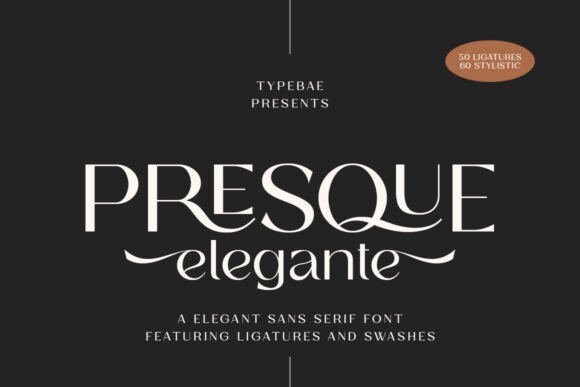
In the competitive landscape of visual communication, the distinction between adequate design and exceptional branding often lies in typographic nuance. While standard sans serif fonts prioritize utility and legibility, they frequently lack the bespoke character required for high-end aesthetics. Introducing Presque Elegante, a sophisticated and stylish sans serif font designed to elevate your creative projects beyond the conventional. This typeface bridges the gap between modern minimalism and artisanal craftsmanship, offering designers a toolkit that transforms static text into dynamic visual narratives. By integrating 50 ligatures and 60 stylistic alternates directly into the font architecture, Presque Elegante allows for a level of customization previously reserved for hand-lettering or complex illustration work.
The Functional Role of OpenType Features in Modern Design
To fully leverage Presque Elegante, one must understand the technical capabilities embedded within its design. The inclusion of extensive OpenType features is not merely decorative; it serves a functional purpose in solving common typographic problems. Standard fonts often suffer from repetitive letterforms that create visual monotony, particularly in headlines or short-form copy. The 60 stylistic alternates included in this family provide immediate solutions for spacing issues, rhythm adjustments, and tonal variation without requiring the designer to switch typefaces or manually manipulate vector outlines.
Ligatures, specifically the 50 unique pairings found in Presque Elegante, address the negative space between characters. In many sans serifs, combinations like "st," "fi," or "th" can appear disjointed or overly spaced. Custom ligatures merge these forms into cohesive units, improving readability and creating a smoother texture across the line. For professionals working in editorial design or packaging, these micro-adjustments contribute significantly to the perceived quality of the final product. The ability to toggle these features via standard design software means that luxury typography becomes an accessible part of the daily workflow rather than a specialized afterthought.
Applications Across Professional Disciplines
The versatility of a sophisticated sans serif extends far beyond traditional graphic design. Different sectors utilize typographic voice to signal authority, creativity, or exclusivity, and Presque Elegante adapts to these varied contexts through its flexible glyph set.
- Fashion and Beauty Branding: In industries driven by aspiration, typography must convey elegance without sacrificing modernity. The stylistic alternates allow brand managers to create custom logotypes and campaign headers that feel proprietary. A beauty label might use the more fluid alternates for product names to suggest softness, while retaining the standard geometric forms for regulatory text to ensure clarity.
- Hospitality and Event Stationery: Wedding invitations, hotel signage, and restaurant menus require a balance of warmth and formality. Standard sans serifs can sometimes feel too corporate for intimate events. By utilizing the ligature sets in Presque Elegante, stationers can introduce a humanist touch that mimics calligraphy while maintaining the clean lines expected in contemporary event design.
- Digital User Interfaces: While primarily a display face, select weights and simplified alternates of Presque Elegante can enhance digital experiences. High-end e-commerce platforms or portfolio websites benefit from distinctive headings that guide user attention. The key here is restraint; using alternates sparingly in UI design creates focal points without compromising navigation or accessibility.
- Editorial and Publishing: Magazine mastheads, book covers, and pull quotes demand immediate visual impact. Editors can cycle through stylistic sets to prevent repetition across multiple pages or issues. This ensures that the publication maintains a consistent brand identity while keeping individual layouts fresh and engaging for readers.
Balancing Aesthetics with Readability Standards
A critical consideration when implementing any decorative typeface is the preservation of legibility. Presque Elegante is engineered as a sans serif first, meaning its foundational structure adheres to principles of optical balance and x-height proportion. However, the abundance of alternates requires disciplined application. Overusing stylistic variants can degrade readability, turning elegant text into visual noise. Best practices dictate that alternates should be used to solve specific compositional challenges or to emphasize hierarchy, rather than applied indiscriminately.
For educators and researchers studying typography, this font serves as an excellent case study in the evolution of digital type design. It demonstrates how historical concepts of scribal variation are translated into binary code. When teaching students about typographic color and texture, Presque Elegante provides tangible examples of how letterform modification affects the overall gray value of a paragraph or headline. Understanding when not to use an alternate is just as important as knowing how to access it. Professional typesetters evaluate each word shape individually, ensuring that the chosen ligature enhances the word’s silhouette rather than distorting it.
Technical Integration and Workflow Optimization
Adopting a feature-rich typeface like Presque Elegante necessitates familiarity with glyph panels and OpenType controls in software such as Adobe Illustrator, InDesign, Photoshop, and increasingly, web design tools like Figma. Efficient workflows involve setting up character styles or CSS classes that automatically apply specific stylistic sets to designated text elements. This reduces manual formatting time and ensures consistency across large-scale projects.
For web developers and digital creators, implementation requires careful attention to CSS font-feature-settings. Not all browsers render OpenType features identically, and performance considerations regarding file size must be weighed against aesthetic benefits. Variable font technology, if supported, can further streamline this process by allowing real-time adjustment of weight and style within a single file. When deploying Presque Elegante online, it is advisable to test ligature rendering across multiple devices to ensure the intended luxurious effect translates accurately to screens of varying resolutions.
The Psychology of Typographic Sophistication
Typography influences perception before content is consciously processed. A sophisticated sans serif signals competence, attention to detail, and premium value. Consumers associate refined letterforms with higher price points and superior service quality. This psychological association makes type selection a strategic business decision for entrepreneurs and marketers. Presque Elegante capitalizes on this by offering enough stylistic range to avoid the generic associations of system fonts while remaining approachable enough for broad commercial use.
The "almost elegant" concept implied by the name suggests a nuanced refinement—it is polished but not pretentious. This positioning appeals to modern audiences who value authenticity over ostentation. In market research, brands utilizing custom typographic treatments often score higher on metrics related to trustworthiness and innovation. By investing in a typeface that offers bespoke qualities, businesses communicate a commitment to craft that resonates with discerning clients. The 50 ligatures act as subtle cues of intentionality; even if the viewer cannot identify why a logo feels balanced, they recognize the care invested in its construction.
Considerations for Licensing and Long-Term Use
Selecting a typeface involves long-term planning regarding licensing scalability and brand evolution. Professionals must verify that their license covers all intended mediums, from print collateral to embedded web fonts and app interfaces. Presque Elegante’s comprehensive character set reduces the need for supplementary fonts, potentially lowering overall licensing costs by consolidating typographic needs into a single, robust family.
Furthermore, future-proofing a brand identity means choosing a typeface with sufficient depth to grow with the organization. A font with limited alternates may suffice for a startup launch but could become restrictive as product lines expand. The 60 stylistic alternates in Presque Elegante provide a reservoir of visual options that can accommodate rebrands, seasonal campaigns, and sub-brand differentiation without abandoning the core typographic system. This longevity makes it a sustainable choice for design systems intended to last years rather than months.
Ultimately, the value of Presque Elegante lies in its capacity to democratize high-end typography. It empowers hobbyists to create professional-grade artwork, enables educators to demonstrate advanced typographic concepts, and allows businesses to cultivate distinct visual identities. By treating the font not as a static asset but as a dynamic instrument of expression, users unlock its full potential. The combination of structural integrity and ornamental flexibility positions this typeface as a vital resource for anyone seeking to infuse their work with sophistication, proving that in the realm of visual communication, the details are indeed the design.