Integrating Cemetery Serif into Seasonal Design Workflows
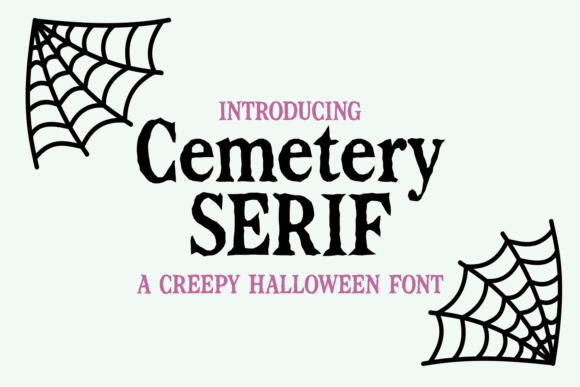
Seasonal design projects require a delicate balance between thematic impact and functional communication. When planning Halloween campaigns, event branding, or horror-themed publications, the typography selected during the initial concept phase dictates the entire visual hierarchy. Cemetery Serif serves as a specialized tool within this workflow, offering a vintage-inspired aesthetic that communicates tone immediately without sacrificing legibility. Unlike purely decorative display fonts that often fail at smaller sizes or in body copy, this typeface retains a classic serif structure beneath its distressed texture. This duality allows designers and marketers to maintain brand consistency while pivoting to seasonal messaging, ensuring that the spooky atmosphere enhances rather than obscures the core message.
Strategic Application in Pre-Production Planning
The decision to use Cemetery Serif should occur during the mood boarding and style guide development stages, well before final assets are rendered. In professional workflows, establishing typographic rules early prevents scope creep and ensures asset compatibility across platforms. Because this font carries specific connotations of old tombstones, ghost stories, and foggy graveyards, it pairs best with muted color palettes, film grain overlays, and high-contrast photography. Integrating it into your template systems at the outset allows for faster iteration later.
When creating style guides for seasonal campaigns, define clear usage parameters for Cemetery Serif. It is most effective when designated as a primary headline or accent font rather than a utility typeface. For example, a haunted house attraction might use it for the main logo and directional signage but rely on a clean sans-serif for ticket pricing and safety disclaimers. This pre-production planning ensures that the jagged edges and cracked textures serve a strategic purpose, guiding the viewer’s eye to key information rather than creating visual noise throughout the entire collateral suite.
Execution Across Digital and Print Media
During the production phase, technical execution determines whether the vintage flair translates effectively to the final medium. The distressed nature of Cemetery Serif presents unique challenges and opportunities depending on the output format. Understanding these nuances is essential for maintaining quality control across different deliverables.
Digital Implementation and Web Performance
For web-based projects, such as landing pages for trick-or-treat events or digital party invitations, file optimization is critical. Display fonts with intricate details can result in large file sizes that slow down page load times. When integrating Cemetery Serif into a website workflow:
- Subset the Font: Remove unused glyphs and language sets to reduce file weight. Since Halloween campaigns are often English-centric, stripping extended character sets can significantly improve performance.
- Test Rendering at Multiple Sizes: Jagged edges can appear pixelated or muddy on low-resolution screens. Verify readability at 16px, 24px, and 48px breakpoints before deployment.
- Pair with System Fonts: Use Cemetery Serif strictly for H1 and H2 tags. Rely on web-safe system fonts for body text to ensure fast rendering and accessibility compliance.
- Check Contrast Ratios: The cracked texture reduces the solid ink area of each letterform. Ensure the background color provides sufficient contrast to meet WCAG standards, as the distressing can inadvertently lower perceived opacity.
Print Production and Material Considerations
In print workflows, the physical substrate interacts directly with the font’s texture. The jagged edges and eroded surfaces of Cemetery Serif behave differently on coated versus uncoated stock. On glossy paper, the fine cracks may fill in with ink or appear too sharp and artificial. Uncoated, textured, or recycled papers typically complement the vintage aesthetic, allowing the ink to bleed slightly into the grain, which enhances the authentic tombstone feel. For large-format signage like haunted house decor or yard signs, verify that the thinnest points of the distressed letters remain structurally sound after cutting or printing. Scaling the font up excessively can sometimes reveal vector artifacts; always review proofs at actual size to confirm the tactile quality matches the digital mockup.
Typography Pairing and Visual Hierarchy
Cemetery Serif does not exist in isolation. Its effectiveness relies heavily on what surrounds it. A common pitfall in seasonal design is over-theming, where every element competes for attention. To maintain professionalism and readability, treat Cemetery Serif as the protagonist in a supporting cast of neutral typefaces.
For horror book titles or editorial layouts, pair it with a traditional transitional serif for chapter headings and a highly legible humanist sans-serif for body copy. This creates a temporal contrast: the title feels ancient and unsettling, while the reading experience remains modern and comfortable. In marketing materials for small businesses, combine it with a geometric sans-serif to bridge the gap between festive and corporate. The clean lines of the secondary font ground the design, preventing the spooky elements from feeling juvenile or unprofessional. This approach allows entrepreneurs to participate in seasonal trends without alienating clients who expect a baseline of corporate competence.
Workflow Integration for Teams and Agencies
For agencies and freelance designers managing multiple client accounts, organization and licensing efficiency are paramount. Cemetery Serif should be integrated into asset management systems with clear metadata tagging. Label files with descriptors like "vintage," "horror," "serif-display," and "seasonal-halloween" to streamline searchability during future projects. If working in a team environment, create shared component libraries in tools like Figma or Adobe CC that include pre-styled text layers using this font. This reduces setup time and ensures consistent tracking, kerning, and sizing across different designers’ work.
Licensing compliance is another critical operational factor. Before deploying Cemetery Serif in commercial branding or merchandise, verify the license tier covers the intended use case. Desktop licenses for internal mockups differ from webfont licenses for live sites or app embedding licenses for interactive experiences. Maintaining a centralized license registry prevents legal exposure and ensures that seasonal assets can be archived and reused in subsequent years without administrative friction.
Balancing Atmosphere with Accessibility
A practical design workflow must account for inclusivity. While Cemetery Serif evokes an eerie feeling appropriate for the season, accessibility cannot be an afterthought. The very features that make it atmospheric—cracks, erosion, irregular baselines—are potential barriers for users with dyslexia or low vision.
Implement a rigorous accessibility check as part of your quality assurance process. Never use Cemetery Serif for essential navigation, forms, or critical instructions. Reserve it for decorative headers, atmospheric quotes, or non-critical flavor text. Always provide alt text for images containing this typography, and ensure that any text rendered as an image has a plain-text equivalent nearby. By treating the font as a stylistic layer rather than a structural necessity, you preserve the undead vibe for those who can appreciate it visually while ensuring the content remains universally accessible. This balanced approach demonstrates professional maturity, showing that creativity and usability are not mutually exclusive.
Long-Term Asset Management and Repurposing
Seasonal assets often have a short active lifespan, but efficient workflows consider long-term value. Designs featuring Cemetery Serif can be templated for future use. After a campaign concludes, strip out client-specific content and save the layout as a generic Halloween template. Document the specific font settings, color codes, and texture overlays used. This creates a reusable framework that accelerates next year’s production cycle.
Furthermore, consider how the font ages. Vintage aesthetics tend to cycle in and out of trend relevance. By keeping your implementation rooted in classic design principles—proper alignment, restrained usage, and strong hierarchy—the work will age better than designs that rely solely on current novelty. Cemetery Serif’s foundation in traditional serif construction gives it longevity that pure novelty fonts lack. When archived correctly, these assets become valuable resources for educators creating classroom materials, bloggers writing annual seasonal posts, or publishers updating backlist horror titles. The initial investment in proper integration pays dividends through sustained utility and reduced future labor costs.