Evaluating Bestie Handwritten for Bold Display Typography
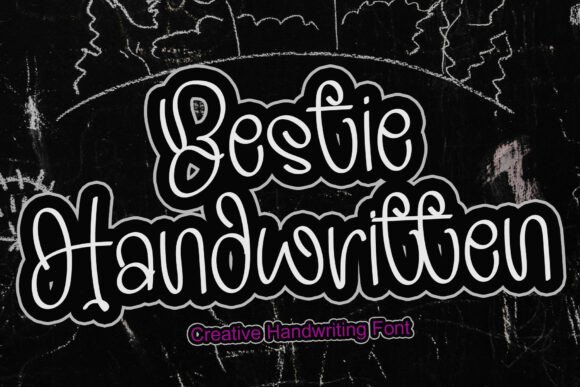
Selecting the appropriate typeface is a critical decision in visual communication, particularly when the objective is to create an immediate emotional connection or establish a distinct brand voice. Bestie Handwritten presents itself as a bold and captivating display font designed specifically for high-impact applications. Unlike delicate script fonts that prioritize elegance over legibility, this typeface utilizes strong, distinctive letterforms to command attention. For designers and project managers evaluating typography options, understanding the specific utility, limitations, and ideal use cases of Bestie Handwritten is essential for determining whether it aligns with current project goals.
Defining the Typographic Character
Bestie Handwritten occupies a specific niche within the display typography category. It is characterized by heavy stroke weights and an organic structure that mimics hand-lettering while maintaining the consistency required for professional design work. The font blends creativity with structural impact, avoiding the overly casual nature of some handwritten styles in favor of a more assertive presence. This balance makes it functionally different from standard body text fonts or fine-line scripts. When evaluating this typeface, it is important to recognize it as a tool for emphasis rather than information delivery. Its primary function is to serve as a visual anchor, guiding the viewer’s eye to key messages, headlines, or brand identifiers.
Strategic Benefits for Visual Projects
The decision to incorporate Bestie Handwritten into a design system often stems from a need to differentiate content in saturated visual environments. There are several practical benefits to consider when weighing this font against other display options:
- Immediate Hierarchy Establishment: Due to its substantial weight and unique texture, this typeface naturally creates a top-level visual hierarchy. It signals importance without requiring additional graphical elements like boxes or underlines.
- Authenticity with Authority: Many handwritten fonts sacrifice authority for approachability. Bestie Handwritten retains a sense of confidence through its bold construction, making it suitable for brands that want to appear human-centric yet established and reliable.
- Versatility Across Mediums: The robust letterforms are designed to maintain integrity across various formats. Whether rendered on high-resolution digital screens or printed on textured paper for posters, the thick strokes prevent the loss of detail that often plagues thinner display fonts.
- Emotional Resonance: The organic imperfections inherent in the design add warmth to layouts that might otherwise feel sterile. This is particularly valuable in industries where personal connection drives conversion, such as lifestyle branding, artisanal products, or community-focused initiatives.
Tradeoffs and Practical Considerations
While Bestie Handwritten offers significant stylistic advantages, objective evaluation requires acknowledging its limitations. No single typeface is universally applicable, and understanding the tradeoffs prevents misuse that could compromise readability or aesthetic cohesion.
The most significant consideration is legibility at smaller sizes. As a bold display font, the negative space between characters and within letterforms is reduced compared to lighter weights. When scaled down for subheads or captions, these spaces can close up, creating visual clutter. Consequently, this typeface should generally be restricted to large-format applications. Designers must also consider pairing strategies. Because Bestie Handwritten has such a dominant personality, it requires supporting typefaces that are neutral and highly legible. Pairing it with another decorative font often results in visual competition that confuses the reader. A clean sans-serif or a traditional serif usually provides the necessary contrast to let the display font perform effectively.
Additionally, users should evaluate the character set and language support before licensing. Display fonts sometimes have limited glyph coverage compared to comprehensive text families. If a project requires extensive special characters, multiple languages, or complex ligatures, it is vital to verify that Bestie Handwritten includes these assets to avoid workflow disruptions later in the production process.
Ideal Use Cases and Applications
Determining fit involves matching the font’s attributes to specific project requirements. Bestie Handwritten is particularly effective in scenarios where the goal is to stop the scroll or capture attention in physical spaces. Strong candidates for this typeface include:
- Brand Identity and Logotypes: For brands seeking a signature look that feels custom-drawn but reproducible, this font serves as an excellent foundation for wordmarks.
- Event Marketing and Posters: In concert flyers, festival signage, or promotional posters, the bold strokes ensure readability from a distance while conveying energy and excitement.
- Social Media Graphics: Digital feeds are visually noisy. The high contrast and distinctive shapes of Bestie Handwritten help text-based graphics stand out in thumbnail views.
- Packaging Design: On product shelves, bold handwriting suggests craftsmanship and authenticity, making it suitable for labels, tags, and box art where shelf appeal is paramount.
When to Consider Alternatives
Despite its strengths, there are situations where Bestie Handwritten may not be the optimal choice. Recognizing these scenarios saves time and ensures better typographic outcomes. If a project involves long-form editorial content, technical documentation, or user interfaces requiring dense information architecture, this font is inappropriate. The cognitive load required to decode bold, stylized letterforms fatigues readers quickly in extended reading contexts.
Furthermore, corporate sectors requiring strict formality, such as legal services, financial institutions, or medical communications, may find the expressive nature of this typeface misaligned with their trust signals. In these cases, a restrained serif or a geometric sans-serif often communicates stability more effectively. Similarly, luxury brands that rely on minimalism and whitespace may find the heaviness of Bestie Handwritten too loud. High-end fashion or jewelry branding typically utilizes high-contrast serifs or ultra-light sans-serifs to convey exclusivity, whereas bold handwritten styles tend to signal accessibility and vibrancy.
Making the Final Selection Decision
Ultimately, the decision to use Bestie Handwritten should be driven by functional needs rather than aesthetic preference alone. Evaluators should test the font in context before finalizing their choice. Create mockups at the actual intended size and view them in the environment where they will live, whether that is a mobile screen or a billboard. Assess whether the boldness enhances the message or overwhelms it. Verify that the tone matches the brand voice; if the brand is whispering, a shouting font will create dissonance.
By approaching Bestie Handwritten as a specialized tool for emphasis and emotional engagement, designers can leverage its captivating qualities effectively. It excels when used with restraint and intention, serving as the exclamation point in a visual sentence rather than the entire paragraph. When the project demands a blend of creativity, impact, and memorable style, and when the constraints of legibility and tone are respected, this typeface proves to be a valuable asset in the typographic toolkit.