Doodle Outline: Elevating Creative Projects with Vibrant Color Fonts
Introducing a vibrant splash to your creative projects requires more than just picking a bright color from a swatch panel; it demands a typeface that embodies joy and whimsy while maintaining professional integrity. Doodle Outline serves as an absolute fit for branding initiatives, packaging designs, riveting logotypes, and gripping headlines because it bridges the gap between playful illustration and functional typography. However, the transformative power of this uplifting aesthetic is often diluted by common application errors. Understanding how to properly leverage this specific style ensures your design endeavors communicate enthusiasm without sacrificing readability or brand authority.
Understanding the Appeal and Function of Doodle Outline
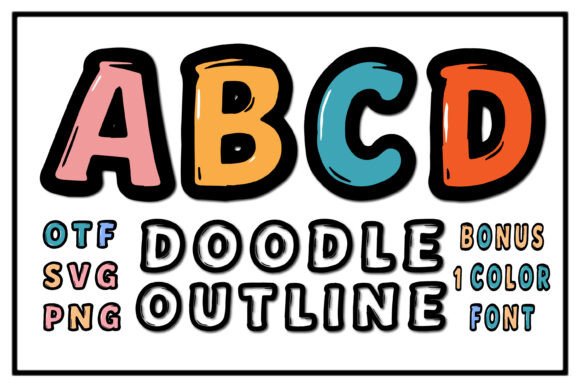
Doodle Outline is not merely a decorative font; it is a strategic design tool intended to evoke nostalgia, creativity, and approachability. People are naturally drawn to this style because it breaks the rigidity of corporate minimalism, offering a human touch that resonates with audiences seeking authenticity. For entrepreneurs, educators, and marketers, this typeface signals that a brand is accessible and innovative. The outline structure specifically allows for versatility that solid fills cannot achieve, enabling designers to play with background interactions and layering effects.
Despite its apparent simplicity, treating Doodle Outline as a generic "fun font" is a significant misstep. It possesses specific geometric properties and stroke weights that dictate where and how it should be used. When creators understand these nuances, they move beyond superficial decoration and begin using the typeface as a core component of their visual identity system. This distinction is what separates amateur social media graphics from cohesive, high-impact packaging and branding campaigns.
Common Pitfalls in Application and Hierarchy
The most frequent mistake designers make when adopting a whimsical color font is overestimating its legibility at small sizes or in low-contrast environments. Because Doodle Outline relies on negative space and stroke definition, reducing it below a certain threshold causes the letters to visually vibrate or disappear entirely against busy backgrounds. This directly impacts user experience, particularly in digital contexts where accessibility standards must be met. A headline that looks charming on a desktop mockup may become an illegible blur on a mobile screen if the stroke width isn't tested across devices.
Another critical error involves poor color contrast management. While the font embodies vibrancy, placing light outlines on white backgrounds or dark outlines on black surfaces negates the form. Beginners often assume the "outline" nature makes the font universally adaptable, but it actually requires more deliberate contrast planning than solid typefaces. Without sufficient tonal difference between the stroke and the canvas, the message is lost regardless of how joyful the letterforms are. Always test your color combinations using accessibility tools before finalizing any packaging or web asset.
Balancing Whimsy with Professional Structure
A common misunderstanding is that using a playful typeface like Doodle Outline means abandoning grid systems and typographic hierarchy. On the contrary, whimsical fonts require stricter structural support to prevent a layout from looking chaotic. When every element competes for attention through color and unique shapes, the viewer’s eye has nowhere to rest. Experienced designers know that Doodle Outline works best when paired with neutral, highly legible sans-serif body copy. This pairing creates a necessary tension that highlights the display font’s personality while ensuring the informational content remains digestible.
- Avoid All-Caps Settings: Many outline and doodle-style fonts lack true capital letter spacing. Using all-caps can create awkward gaps or overlapping strokes that degrade quality. Stick to title case or sentence case unless the font file explicitly includes optimized uppercase kerning.
- Limit Color Variations: Just because the font supports multiple colors doesn’t mean you should use them all simultaneously. Restrict your palette to two or three harmonious tones to maintain brand consistency and visual clarity.
- Mind the Kerning: Display fonts often have loose default tracking. Manually adjust letter spacing for headlines to ensure the rhythm feels intentional rather than accidental.
Evaluating Technical Quality Before Licensing
Before integrating Doodle Outline into a commercial project, savvy creators must evaluate the technical construction of the font file itself. Not all doodle fonts are created equal; some are hastily traced vectors with uneven stroke widths, open paths, or missing glyphs. These defects might go unnoticed in a single Instagram post but become glaring issues in large-format printing or comprehensive branding kits. Check the character set thoroughly to ensure it includes necessary punctuation, numerals, and language support relevant to your target market. Missing symbols can force you to mix incompatible typefaces mid-project, compromising the unified look you aimed to achieve.
Licensing is another area where professionals distinguish themselves from hobbyists. Verify whether the license covers your specific use case, especially for packaging, merchandise, or embedded web fonts. Assuming a standard desktop license covers product packaging is a costly legal risk. Furthermore, check if the font includes OpenType features such as alternates, ligatures, or swashes. These built-in variations allow you to customize the "doodle" feel organically, preventing repetitive letter patterns that make generated text look robotic. Utilizing these features transforms a static font into a dynamic design system.
Strategic Integration for Maximum Impact
To truly experience the transformative power of this uplifting aesthetic, apply Doodle Outline with restraint and purpose. Use it to guide the viewer’s eye toward key value propositions or calls to action rather than as mere background texture. In packaging design, consider using the outline version to create windows where product photography shows through, integrating the typography physically with the product. For digital headlines, animate the stroke draw-on effect to capture attention without relying on jarring motion.
Ultimately, the goal is to let the font enhance your message, not overshadow it. By avoiding common legibility traps, respecting typographic hierarchy, and verifying technical specifications, you ensure that Doodle Outline serves as a robust foundation for your creative work. When applied correctly, it does more than decorate; it communicates a brand’s spirit with clarity and confidence, turning casual viewers into engaged participants in your design narrative.