Bruggman: The Intersection of Raw Strength and Refined Elegance in Modern Typography
In the current landscape of visual communication, the search for authenticity has moved beyond a mere trend to become a fundamental requirement. Audiences are increasingly adept at filtering out polished perfection, seeking instead designs that carry a sense of human touch and narrative depth. This shift has elevated the importance of display typography that can convey complex emotional dualities. Enter Bruggman, a captivating display font that mimics the fluid unpredictability of rough paint strokes with an intrinsic elegance. It arrives at a critical moment when designers and brands are tasked with balancing opposing forces: the need for digital clarity and the desire for organic texture.
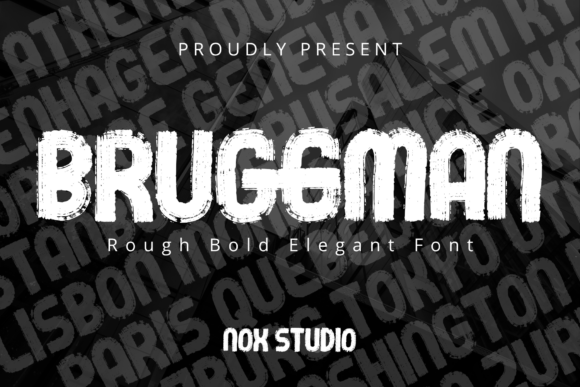
Bruggman is not merely a collection of glyphs; it is a strategic design tool. Seamlessly blending masculine strength within its delicate design, this typeface exudes a veritable aura of mystery and sophistication. For professionals ranging from boutique agency owners to independent content creators, the challenge often lies in finding a typeface that feels handcrafted without sacrificing legibility or authority. Bruggman addresses this specific friction point. It serves as the perfect choice for design projects that require a dash of elegance wrapped in a shroud of enigma while maintaining a raw, muscular feel. Understanding how to leverage this unique aesthetic is essential for creating work that resonates in a saturated market.
The Evolution of Expressive Typography in Digital Spaces
To understand the relevance of Bruggman, one must look at the broader evolution of typographic trends over the last decade. We have transitioned from the rigid dominance of geometric sans-serifs—which prioritized utility and screen optimization—to a renaissance of expressive, character-driven lettering. While clean lines remain necessary for user interfaces and body text, headlines and branding elements now demand more personality. The modern viewer expects a brand’s visual identity to reflect its values instantly. A sterile font suggests efficiency but lacks soul; a chaotic script suggests creativity but risks illegibility.
Bruggman occupies the vital middle ground between these extremes. Its development reflects a growing maturity in font technology and design philosophy. We are no longer forced to choose between "art" and "function." The fluid unpredictability of rough paint strokes found in this typeface is rendered with enough precision to function across various media, from large-format print to high-resolution social graphics. This evolution mirrors a change in consumer psychology. People are drawn to imperfections because they signal honesty. In an era of AI-generated imagery and automated content, the deliberate, muscular stroke of a font like Bruggman acts as a visual anchor, grounding digital experiences in something that feels tangible and human-made.
Balancing Masculine Strength with Delicate Nuance
One of the most difficult challenges in contemporary branding is avoiding gendered clichés while still communicating distinct tonal qualities. Traditional design education often separated "strong" fonts from "elegant" ones, creating a binary that limits creative expression. Bruggman disrupts this outdated categorization by seamlessly blending masculine strength within its delicate design. This synthesis is particularly valuable for businesses and creators who want to project confidence without aggression, or refinement without fragility.
Consider the practical application for a craft brewery launching a premium line, or a law firm specializing in creative arts. Both entities need to communicate stability and expertise (strength) alongside innovation and appreciation for nuance (elegance). Using a standard bold serif might feel too stuffy; using a thin script might feel too insubstantial. Bruggman provides a third option. Its structure holds weight and commands attention, yet the ink-trap details and brush-like terminals soften the delivery. This duality allows for versatile storytelling where the typography itself does half the heavy lifting in establishing brand voice.
Practical Applications for Modern Workflows
For freelancers, marketers, and business owners, time is a finite resource. Selecting a typeface should not be an exercise in compromise. Bruggman fits into modern workflows by offering immediate impact without requiring extensive customization. When integrating this font into your next project, consider the following practical implications to maximize its effectiveness:
- Headline Hierarchy: Bruggman shines brightest at large sizes. Use it exclusively for primary headers, hero images, and logo lockups. Pairing it with a neutral sans-serif for subheads and body copy creates a necessary contrast that enhances readability and lets the display font breathe.
- Color and Texture Interaction: Because the font mimics paint strokes, it interacts uniquely with color. Dark backgrounds tend to emphasize the elegance and mystery, while light backgrounds highlight the raw, muscular texture. Test your color palettes specifically with this typeface, as the ink spread simulation may alter perceived contrast ratios.
- Social Media Engagement: In feed-based environments where users scroll rapidly, static text often fails to arrest attention. The dynamic movement inherent in Bruggman’s letterforms creates natural leading lines that guide the eye. This makes it exceptionally effective for quote cards, announcement teasers, and short-form video overlays.
- Packaging and Merchandise: For physical products, the tactile quality of the font translates well to embossing, debossing, and textured paper stocks. The irregular edges catch light and shadow differently than vector-perfect fonts, adding a layer of sensory engagement that elevates perceived value.
Navigating Legibility and Accessibility
While the aesthetic appeal of Bruggman is undeniable, responsible design requires a commitment to accessibility. Display fonts with organic, unpredictable forms present unique challenges regarding WCAG compliance and general readability. It is crucial to approach Bruggman as a stylistic accent rather than a utilitarian workhorse. Avoid using it for long paragraphs, navigation menus, or critical legal disclaimers. Instead, reserve it for moments where emotional resonance takes precedence over rapid information consumption.
Furthermore, ensure sufficient spacing when setting words in Bruggman. The rough edges of the characters can visually collide if tracking is too tight, reducing legibility. Giving the letters ample negative space preserves the integrity of the paint-stroke effect and ensures that the "mystery and sophistication" do not devolve into visual noise. For web implementation, always provide a robust fallback stack. If the custom font fails to load, the user experience should remain functional, even if the specific atmospheric quality is temporarily lost. This pragmatic approach ensures that your pursuit of style never undermines usability.
Why Authenticity Matters in Current Market Preferences
The market preference for fonts like Bruggman is symptomatic of a larger cultural shift toward "curated authenticity." Consumers are fatigued by hyper-polished corporate aesthetics. They trust brands that appear to have a pulse. However, true authenticity in design is not about being messy; it is about being intentional. Bruggman offers a controlled chaos. It looks spontaneous, but every curve and splatter is digitally optimized for consistency.
This distinction matters for entrepreneurs and educators building personal brands. Your typography signals whether you are trying too hard or if you are comfortably established in your niche. A font that exudes a veritable aura of mystery suggests there is depth to explore, inviting the audience to lean in. Conversely, overly generic typography suggests a lack of investment in the details. By choosing a typeface that balances raw energy with sophisticated construction, you signal to your audience that you value both substance and style. You are telling them that your content, product, or service has been crafted with the same level of care and intentionality as the letters on the screen.
Future-Proofing Your Visual Identity
Trends cycle quickly, but certain design principles endure. The appreciation for craftsmanship and human expression is unlikely to fade as technology advances; if anything, it will become more premium. Investing in high-quality display typography like Bruggman is a way to future-proof your visual assets against the flattening effect of algorithmic design. As AI tools make it easier to generate average visuals, distinctive, opinionated typography becomes a key differentiator.
When building a design system or refreshing a brand identity, think of Bruggman not just as a font file, but as a component of your narrative infrastructure. It sets a tone that photography and color alone cannot achieve. It bridges the gap between the digital and the analog, satisfying the modern user's expectation for seamless technology while fulfilling their deeper craving for connection and warmth. Whether you are designing a book cover, a festival poster, or a luxury e-commerce site, the goal remains the same: to create something that feels inevitable. Bruggman provides the vocabulary to articulate that feeling, offering a sophisticated solution for those who refuse to choose between power and grace.
Ultimately, the decision to use such a distinctive typeface is a declaration of intent. It tells the world that you are willing to embrace complexity. In a professional environment that often rewards safe choices, opting for the fluid unpredictability of rough paint strokes is a calculated risk that pays dividends in memorability and emotional engagement. By understanding the nuances of this tool and applying it with restraint and purpose, creators can elevate their work from merely functional to genuinely captivating.