Sticky Honey: Warmth and Clarity in Display Type
Finding a typeface that balances personality with professional utility is one of the most common challenges in modern typography. You often have to choose between sterile geometric sans serifs that lack soul or ornate script fonts that sacrifice legibility for style. Sticky Honey occupies a valuable middle ground as a casual and neat display font designed specifically to bridge this gap. It brings an immediate sense of warmth and clarity to projects without looking messy or unprofessional. For designers, marketers, and small business owners, this balance is essential. It allows you to create brand identities and headlines that feel genuine and inviting while maintaining the structural integrity needed for effective communication.
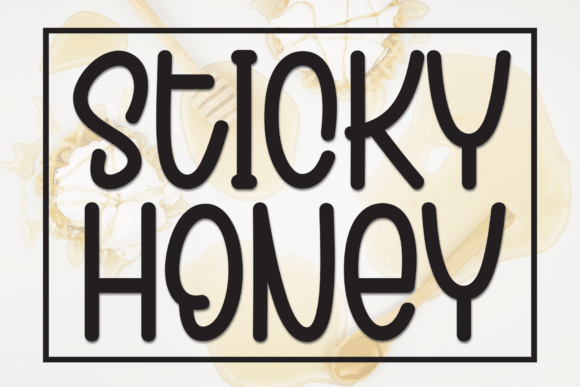
The visual character of Sticky Honey is defined by its approachable nature. Unlike traditional serif fonts that can sometimes feel too academic or formal, or handwritten fonts that may appear chaotic at larger sizes, this typeface offers a clean structure. The letterforms are balanced and intentional, providing readability even when used prominently. This makes it distinct from many other creative fonts on the market. It possesses a tactile quality—hence the name—that suggests something sweet and accessible, yet the execution remains sharp enough for commercial applications. When you use it in a layout, it signals to the audience that the content is friendly but trustworthy, setting a tone that encourages engagement rather than passive observation.
Ideal Applications Across Digital and Print Media
Versatility is a key metric when evaluating premium font assets for your library. Sticky Honey performs exceptionally well across a variety of mediums because its design prioritizes clarity alongside charm. In branding and logo design, it serves as an excellent primary wordmark for businesses in the food, lifestyle, children’s education, and artisanal sectors. The font carries enough weight to be memorable on a storefront sign or product packaging, yet it retains enough finesse to work on a business card or social media profile picture. For entrepreneurs building a brand identity from scratch, it provides an instant emotional connection that typically requires extensive custom illustration to achieve.
In editorial design and publishing, the font shines as a headline choice. Whether you are designing a blog post feature image, a magazine spread, or an ebook cover, Sticky Honey creates a strong visual hierarchy. It draws the eye immediately without competing with the body text. This is particularly useful for content creators and bloggers who need to stop the scroll on platforms like Instagram or Pinterest. Social media graphics benefit significantly from its high legibility at smaller screen sizes. While some display fonts degrade when scaled down for mobile viewing, the neat construction of Sticky Honey ensures that your message remains crisp. This practical reliability makes it a staple for daily design tasks where speed and consistency are just as important as aesthetics.
Packaging design presents another area where this typeface adds significant value. Labels require a delicate mix of regulatory compliance, brand storytelling, and shelf appeal. A font that is too decorative can make ingredients hard to read, while one that is too standard can make a product look generic. Sticky Honey offers the "handmade" aesthetic that consumers associate with quality and care, but with the uniform spacing required for professional printing. It works beautifully for jar labels, box art, and tags, reinforcing the product's narrative through typography alone.
Enhancing Brand Perception and Audience Engagement
Typography is never just about letters; it is about psychology. The choice of typeface directly influences how an audience perceives a brand's professionalism and authenticity. Sticky Honey leverages the principles of modern typography to evoke feelings of comfort and transparency. In an era where consumers are increasingly skeptical of overly polished corporate messaging, a font that feels human and grounded can improve trust. It softens the edges of commercial communication, making marketing materials feel more like a conversation and less like a broadcast. This is crucial for service-based businesses, therapists, coaches, and community organizations where approachability is a core value proposition.
Consistency in visual communication builds recognition. When you integrate Sticky Honey into your design system, it acts as a recurring visual anchor. Because it is distinctive without being distracting, it can be used repeatedly across newsletters, web banners, and printed collateral without causing fatigue. This repetition strengthens brand recall. Furthermore, the font’s inherent warmth can increase audience engagement metrics. Headlines set in approachable typefaces often see higher click-through rates because they promise a positive user experience. By aligning your typographic choices with the emotional intent of your content, you create a cohesive journey for the user that supports your broader marketing goals.
Practical Guidance for Implementation and Pairing
To get the most out of Sticky Honey, thoughtful implementation is required. As a display font, it is optimized for larger sizes and shorter text blocks. Avoid using it for long-form body copy or dense paragraphs, as the unique character shapes can reduce reading speed over extended periods. Instead, reserve it for titles, pull quotes, navigation elements, and calls to action. For body text, pair it with a neutral sans serif font or a highly legible serif font. The contrast between the personality of Sticky Honey and the invisibility of a standard text face creates a dynamic tension that guides the reader’s eye through the layout effectively. Testing these pairings in context is vital; what looks good in isolation may need adjustment when placed next to other design assets.
When evaluating project fit, consider the specific mood you aim to convey. If your project requires stark minimalism or high-tech precision, this font may be too warm. However, if the goal is to communicate hospitality, creativity, nostalgia, or organic quality, it is likely a strong candidate. Always review the included styles and character sets before committing. Check for necessary ligatures, alternates, or language support to ensure the font can handle your specific copy requirements. For commercial projects, verifying licensing is non-negotiable. Ensure you have the appropriate commercial font license for your intended use, whether that is digital-only, print, or merchandise. Respecting intellectual property not only keeps you legally safe but also supports the type designers who create these valuable tools.
Finally, test readability across different backgrounds and colors. Sticky Honey’s balanced letterforms generally hold up well, but contrast ratios still matter for accessibility. Light text on a dark background can sometimes cause the strokes to appear thinner, so you may need to adjust the weight or tracking slightly. Conversely, on textured paper or busy photographic backgrounds, ensure there is sufficient negative space around the text to maintain clarity. By treating typography as a functional component of your design strategy rather than mere decoration, you unlock the full potential of Sticky Honey. It becomes more than just a pretty face; it becomes a reliable instrument for clear, warm, and effective communication that resonates with real people.